Sara Rayner (USA) made the switch from ‘normal’ pottery to pottery for bonsai after visiting a bonsai convention in the late eighties.
Can you tell us something about how you got into bonsai pottery?
I started in 1976 as a studio potter producing functional and decorative pieces from stoneware and porcelain clays. My switch to bonsai pots came in 1987. I visited an International Bonsai Conference in Minneapolis, hosted by the Minnesota Bonsai Society.
I was fixated then only on the trees until I joined the club and realized the importance of the containers and saw the enthusiasm the members had for some of the preliminary pots I’d begun experimenting with. It was an exciting moment, both discovering the art of bonsai and the possibility of a solid direction for my craft.
Who was your teacher? What is the most important thing you learned?
I was self-taught, so did not benefit from a formal art education. What I may have gained was a more individual approach to form, as I did not have a guru to emulate.
Why ceramic? What's so fascinating about it?
I have a fascination for many natural materials, mostly inert. Had I been introduced to glass blowing early on, that could have been my direction. With ceramics, I became immersed with the process of raw materials heated to a molten state and then recrystallizing into objects of use and beauty.
After all my years of kiln firings, there is still an intense excitement on holding a new pot that now seems to have its own light source. The bubbles, crackles, colours and translucency of the glazes and clays makes this happen.
What is your philosophy on bonsai ceramics?
I don’t really have a philosophy, I’m happier when I don’t try to think about it too much. I feel my way through this I guess; when it works, it works. You just know.
Do you make the glazes yourself?
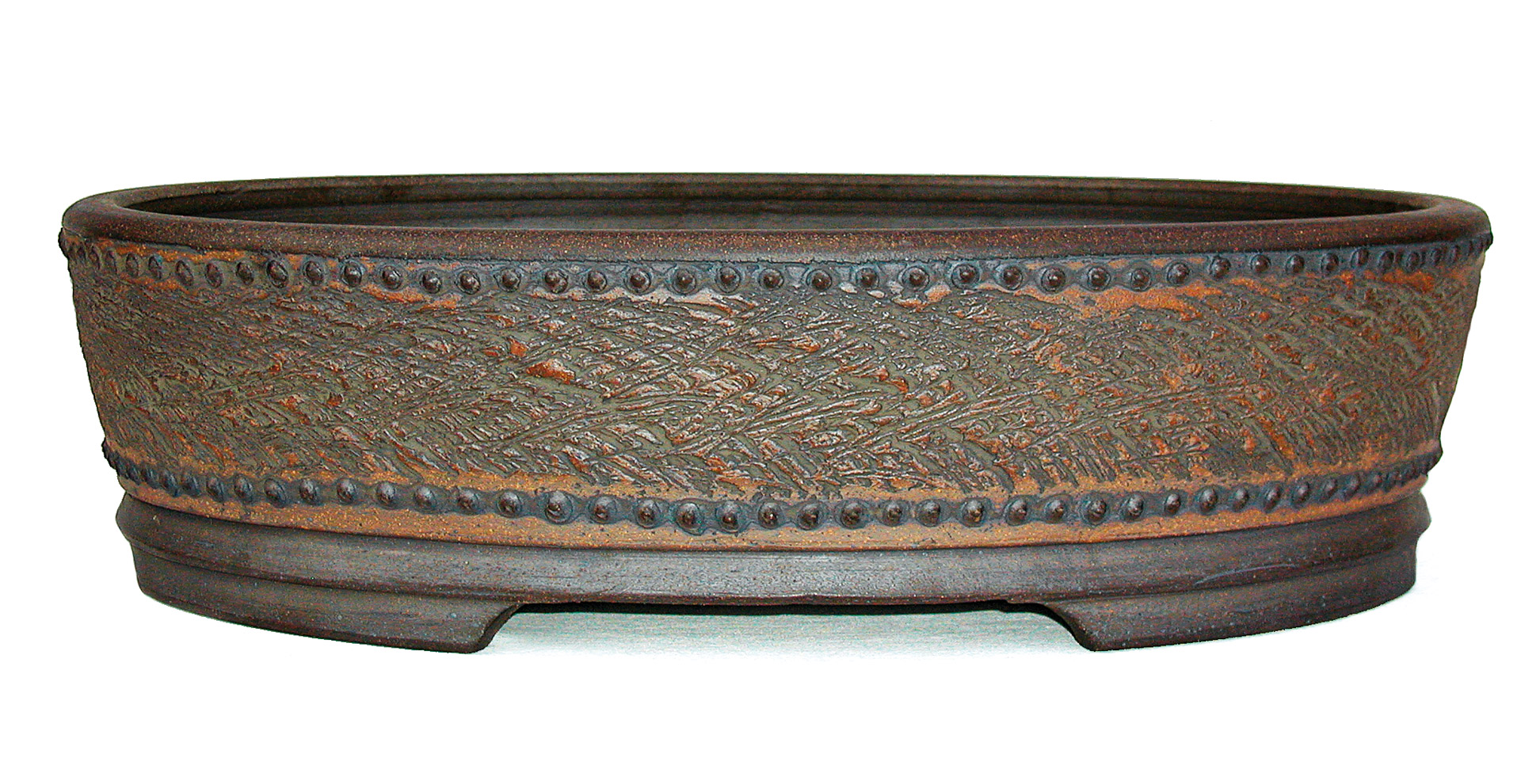
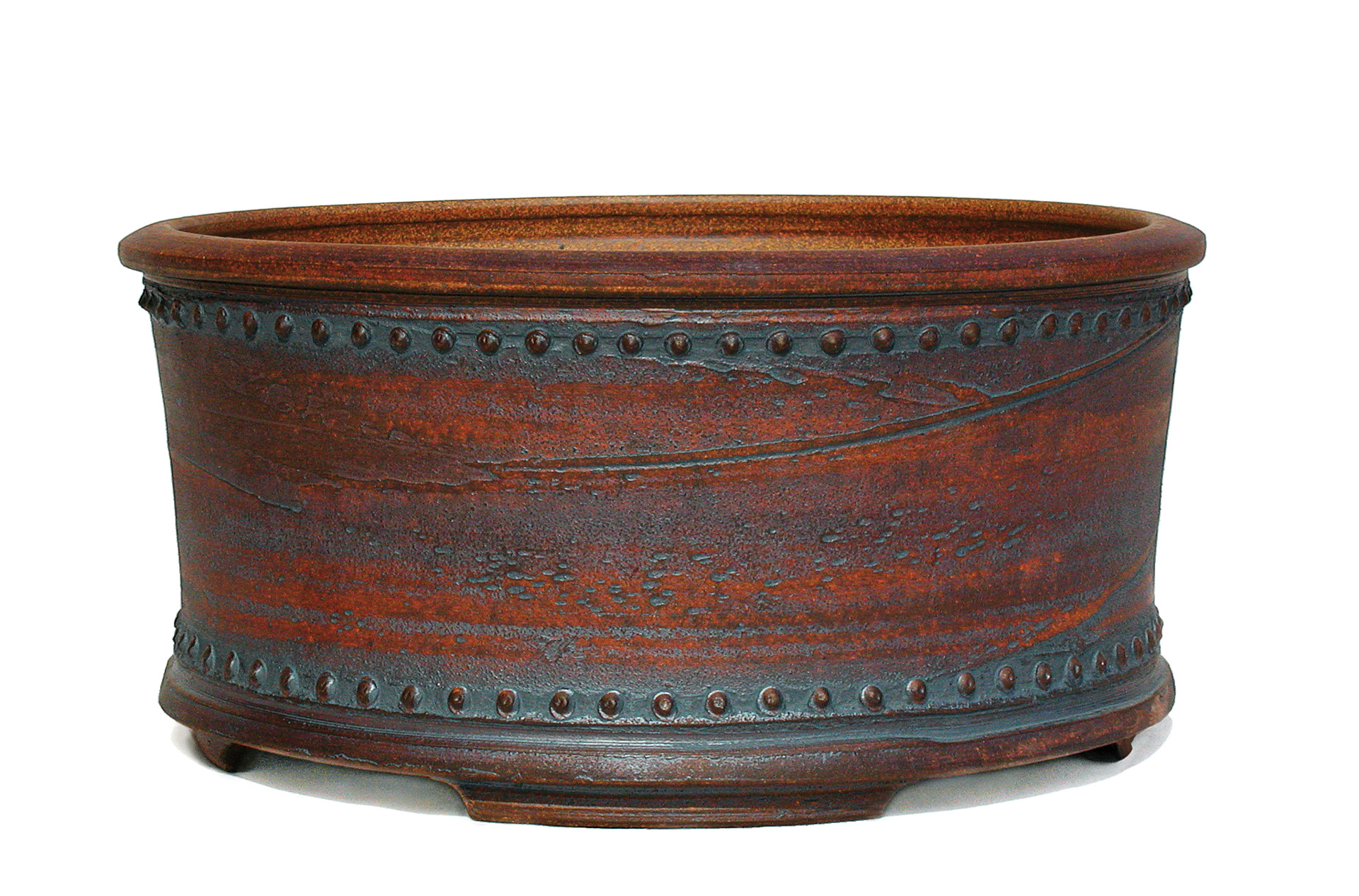
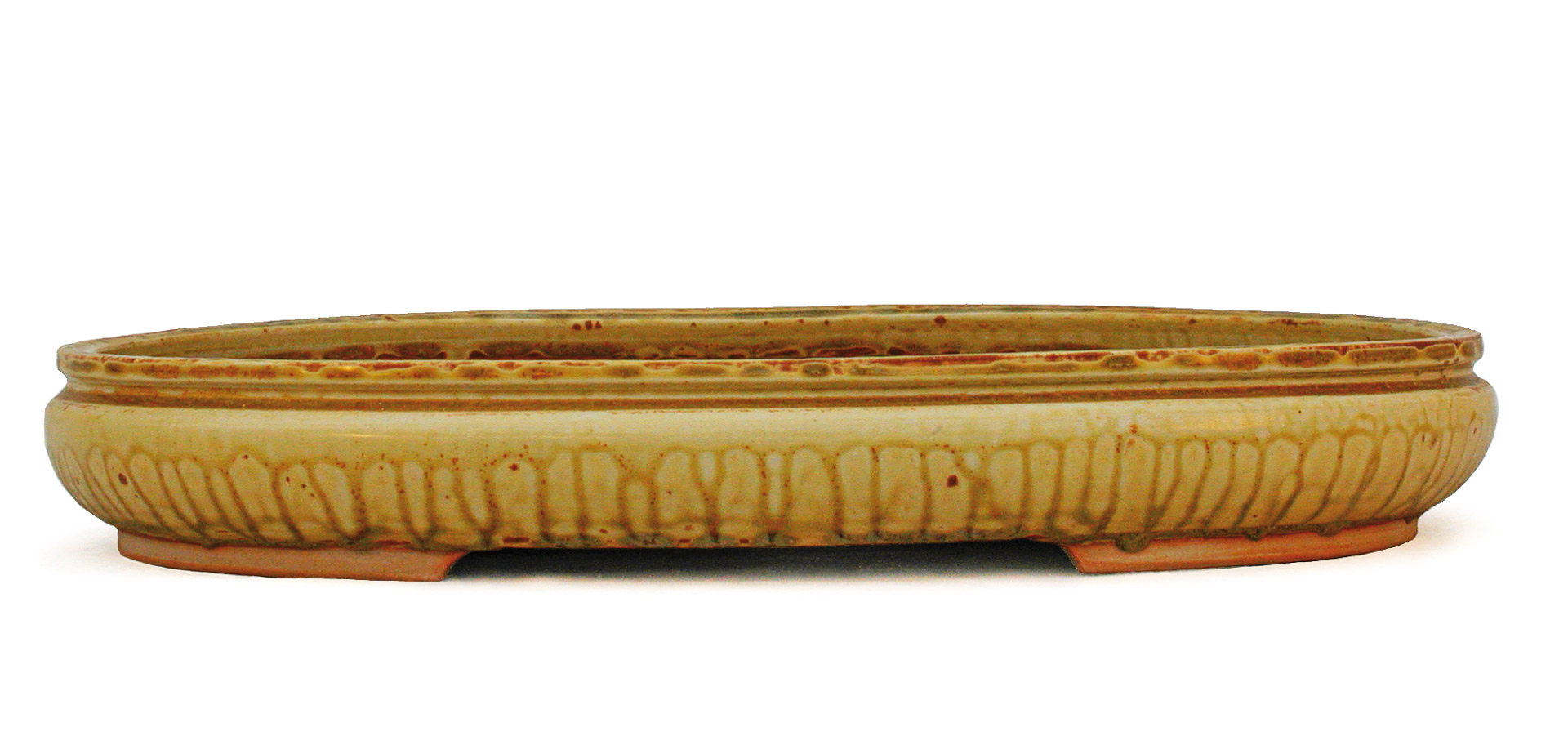
Yes, I have always made my own glazes. Many are the original recipes I used from my pre-bonsai production, only altered slightly to coordinate better on bonsai pots. I work with a lot of wood ash, stains and iron based clays to obtain natural and earthy surface variations.
Do you prefer the Japanese or the more Western style?
Although I incorporate many design elements of the Japanese style into my pots, I don’t really have a preference. I liken that to an ethnic food or music style preference. I appreciate any style if it is well designed and balanced to the needs of bonsai.
What do think of the Japanese colours and shapes?
There is a reason that traditional Japanese styles have remained a constant for so long. They maintain strong balanced forms with a special eye for the detail when it comes to clay bodies, surface techniques and craftsmanship. They are subtle and quiet and have greatly influenced me.
Do you think that hand-made pots are appreciated and valued by bonsai enthusiasts?
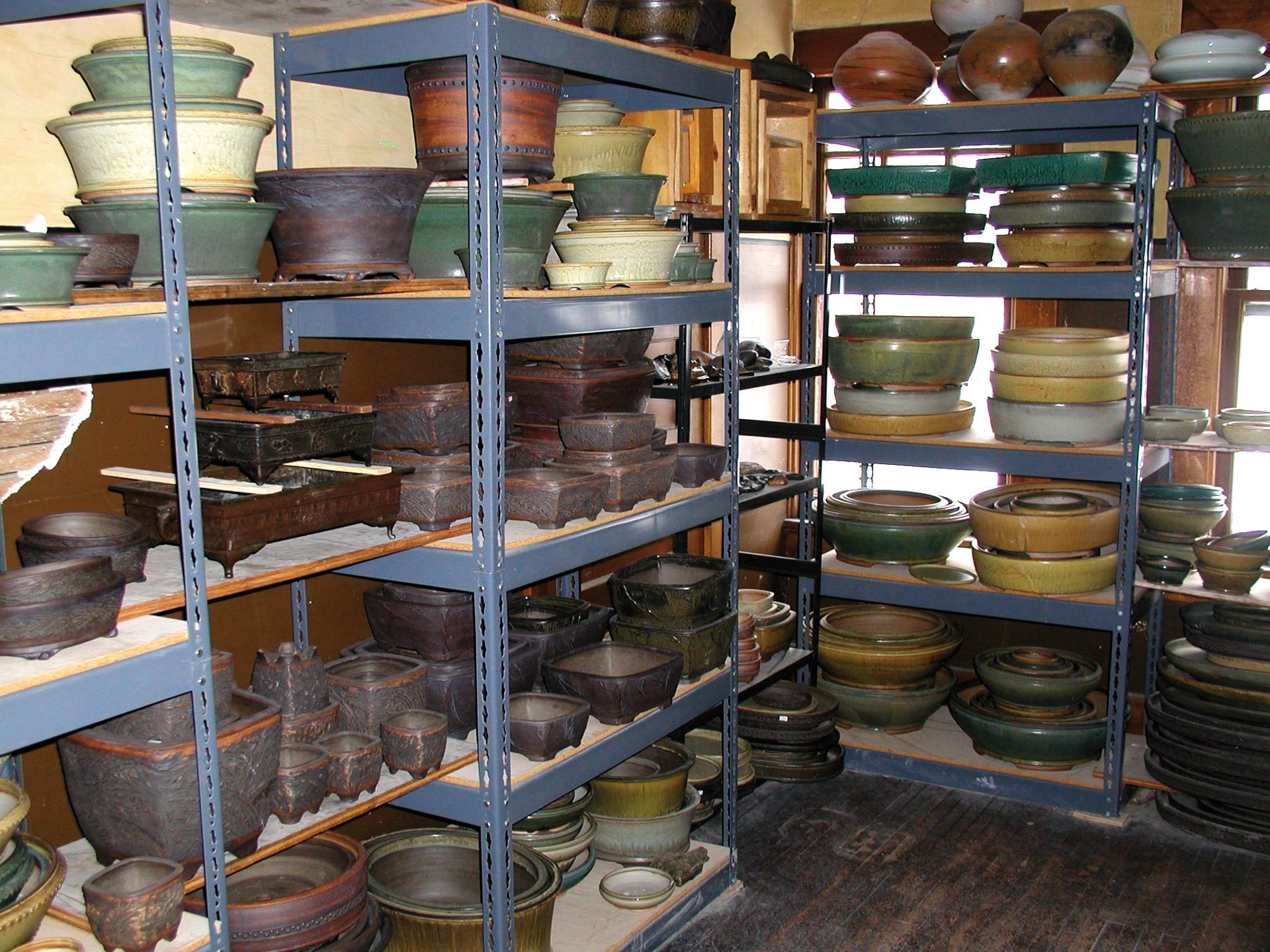
I guess this is a ‘taste’ thing. I know of bonsai enthusiasts who use only traditional Japanese pots, others who will use anything but. My customers in general are interested in using my pots for their functionality and their basic traditional forms, but their enthusiasm is evident at seeing variations in design, textures and finishes that are unique to my work. I want it to be fresh and a bit organic; I know it is appreciated for the choice it gives them on how to express their own art form.
Do you have any other interests or hobbies
other than pottery?
I have quite a few other interests and hobbies, though finding time for them is a challenge. Growing bonsai of course goes hand in hand with making bonsai pots. I have yet to meet a bonsai potter who does not grow bonsai.
But maintaining my landscape and some ongoing prairie restoration work is what I enjoy the most. We live on 20 plus acres where I maintain 6 honey bee hives, learning to be a beekeeper. In my very free time, I am an avid birdwatcher.
What or who inspires you?
Realistically I think inspiration comes from nature, if I wanted to get all artsy fartsy with this. But simplistically, inspiration comes from my successes and failures. Any design idea that results in success is creatively motivating, morphing into a new direction until I exhaust that energy. A design idea that results in failure is equally important in the creative process; it reminds me of the boundaries I must stay within for good container design.
After all my years of kiln firings, there is still an intense excitement on holding a new pot
What do you like about bonsai and making pots for bonsai?
We are talking about my attraction to 3-dimensional objects. A good bonsai has a wonderful depth of field and negative space. It will draw me into it, transforming and transporting me with the emotion it creates. Making pots for these trees is an honour to be quite honest, as well as providing an ongoing challenge for me. The challenge is a technical and creative one and meeting it gives me energy and satisfaction.
Moulds, slip casts or hand shaped, which of these do you prefer? Or is there a better way?
I do not think there are good, bad, or better ways of making bonsai pots. There’s a common misconception that pots of high quality have to be hand made. Likewise that a slip cast pot is of poor quality. Any method of making bonsai pots can produce a high quality product so long as attention to detail, design and materials are maintained.
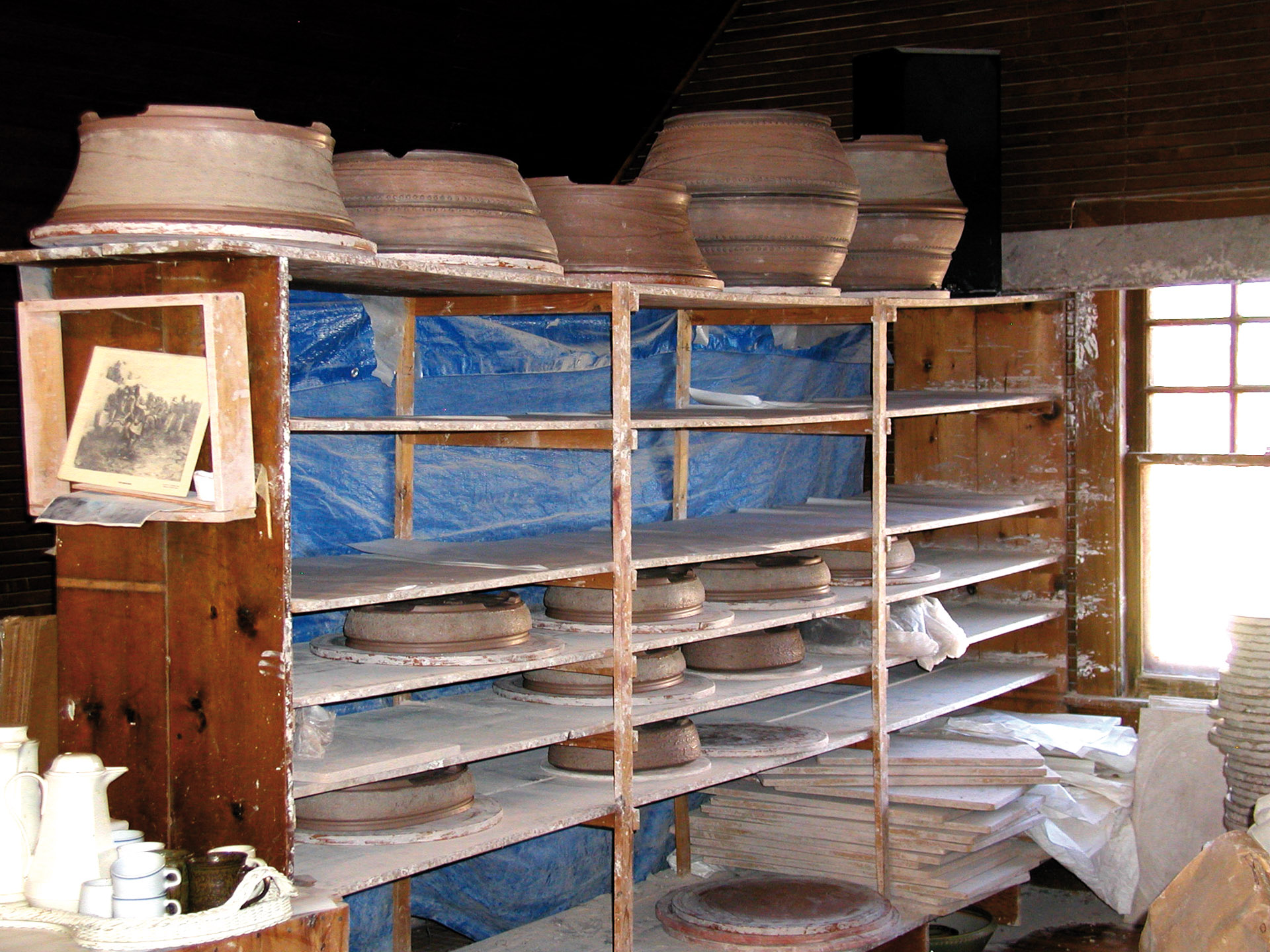
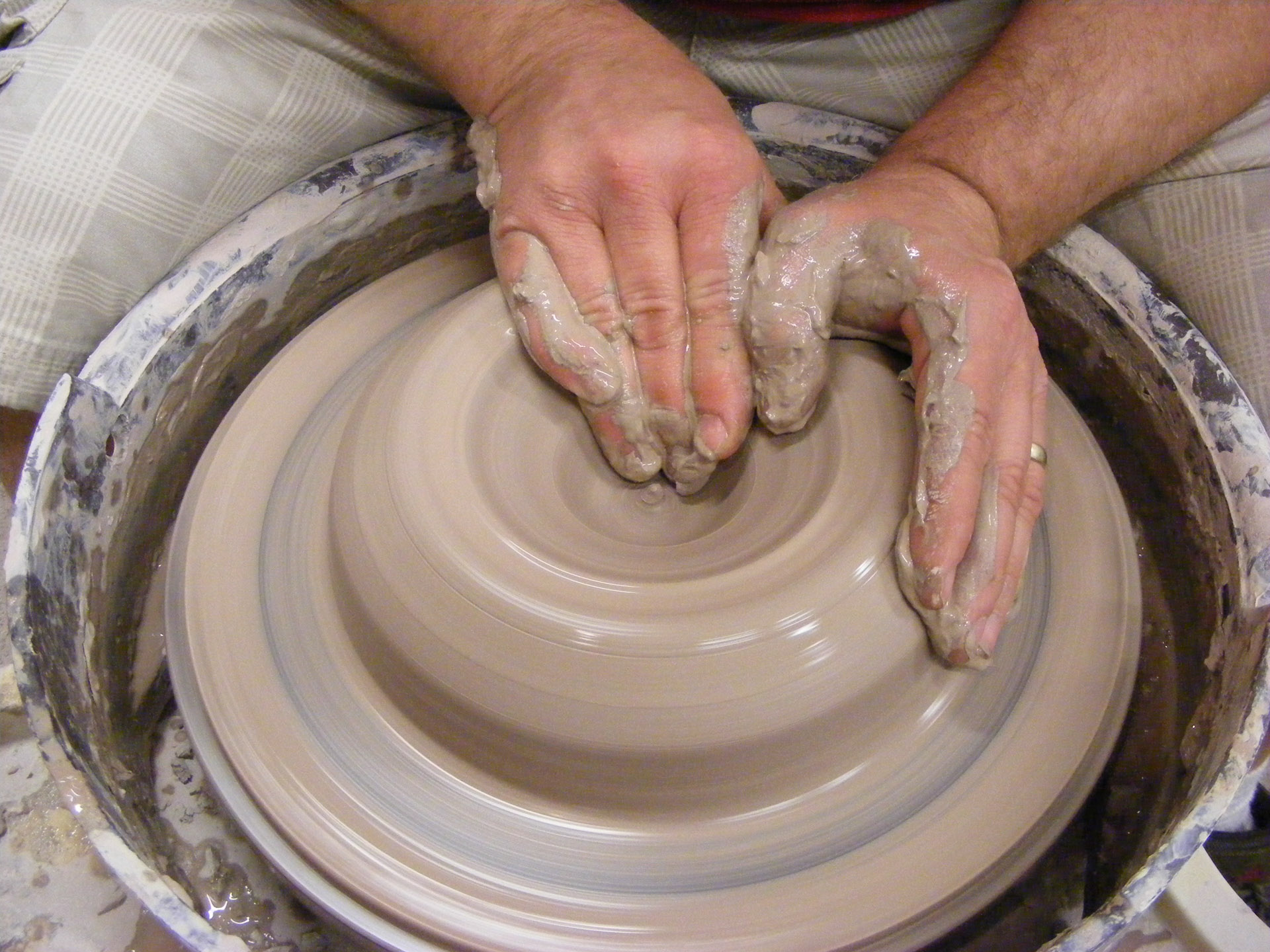
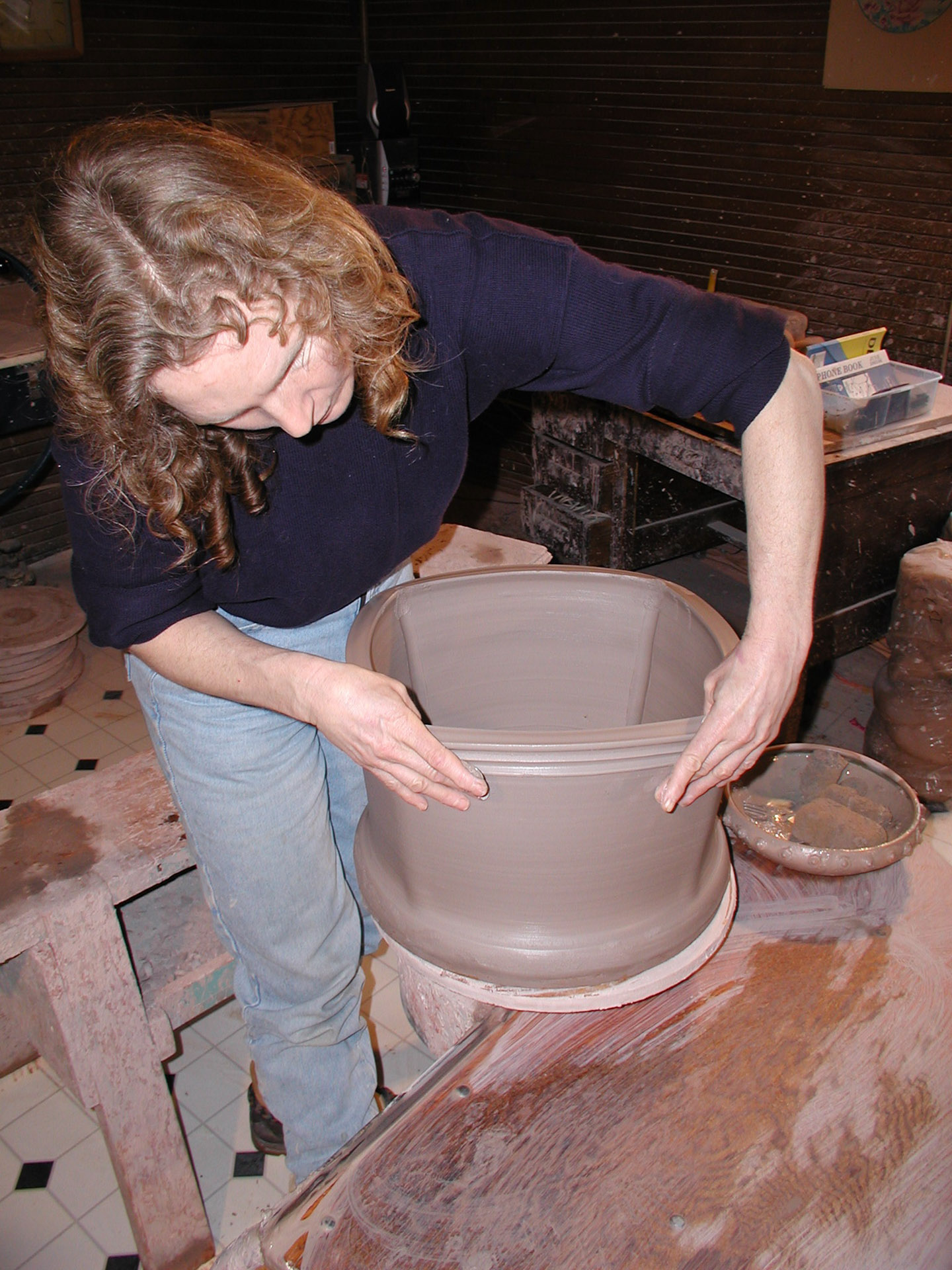
I work solely on the potter’s wheel simply because it holds the most interest for me and it is where my strengths lie. Pots are thrown round to begin with, then altered and trimmed into ovals, squares and rectangles. I am a production potter, working out a design idea through a series of sizes and finishes. I really enjoy and, indeed, have much success in reproducing past work.
We use cookies on our website to give you the most relevant experience by remembering your preferences and repeat visits. By clicking “Accept”, you consent to the use of ALL the cookies.
This website uses cookies to improve your experience while you navigate through the website. Out of these cookies, the cookies that are categorized as necessary are stored on your browser as they are essential for the working of basic functionalities of the website. We also use third-party cookies that help us analyze and understand how you use this website. These cookies will be stored in your browser only with your consent. You also have the option to opt-out of these cookies. But opting out of some of these cookies may have an effect on your browsing experience.
Necessary cookies are absolutely essential for the website to function properly. This category only includes cookies that ensures basic functionalities and security features of the website. These cookies do not store any personal information.
Any cookies that may not be particularly necessary for the website to function and is used specifically to collect user personal data via analytics, ads, other embedded contents are termed as non-necessary cookies. It is mandatory to procure user consent prior to running these cookies on your website.
Send me the newsletter.
You can cancel your Bonsai Today membership at any time, and you will continue to have access to Bonsai Today through the end of your billing period. To cancel, go to the ‘Members‘ page and click on ‘Cancel‘ in My Memberships.