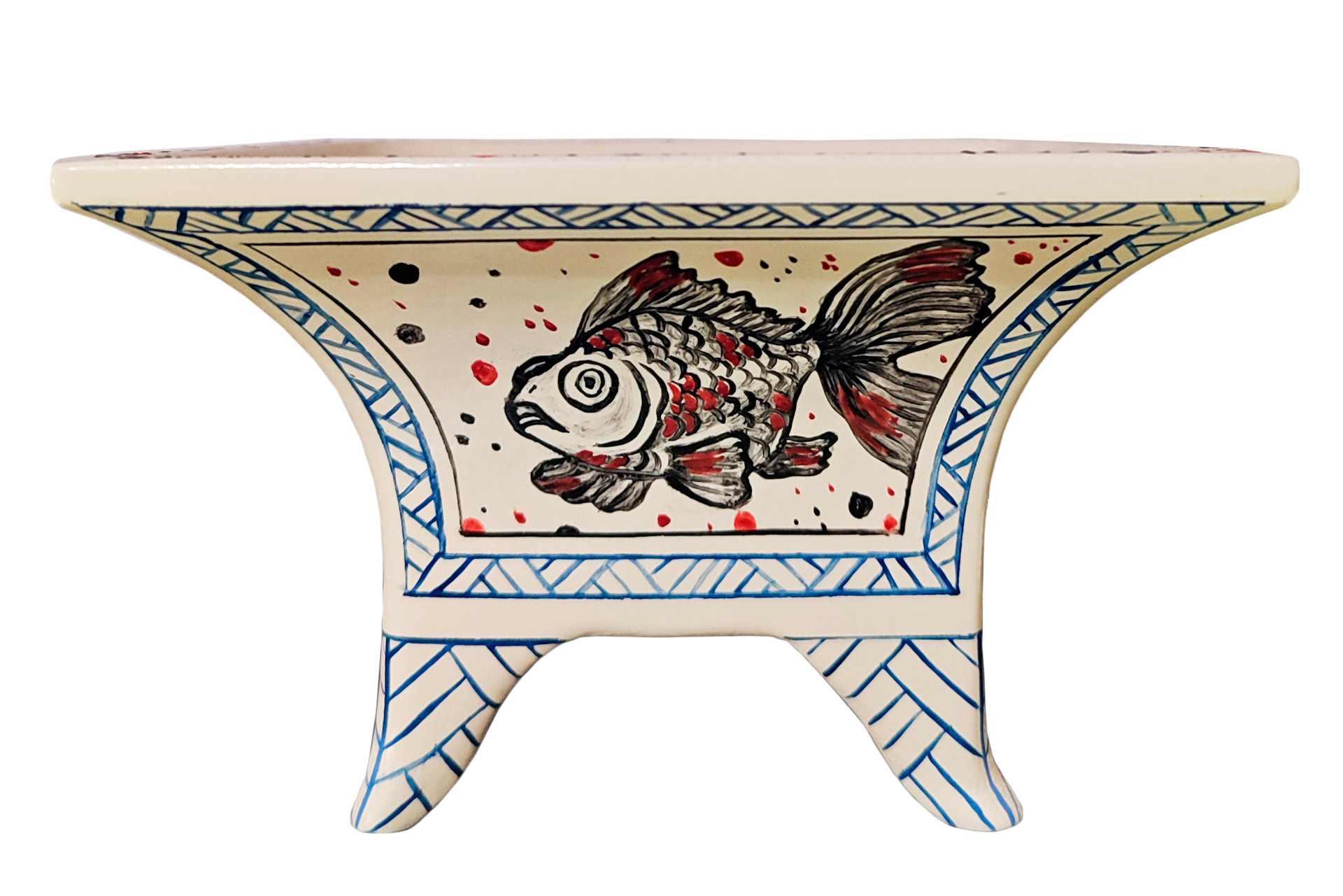
Fine bonsai ceramics for shohin, mame and shitakusa from Vasart Bonsai
Samuele Quarena (SQ) and his father, Giovan Battista Quarena (GBQ), make bonsai pots together. Giovan Battista collects clay in the mountains, filters it and makes it ready for processing. Together, they study the designs so that Samuele can decorate them
Giovan Battista has kept bonsai for 25 years. In 2010, already an accomplished artist, he started working with ceramics, making decorative vases, and domestic pottery, also exploring raku techniques. Samuele has been keeping trees, and collecting bonsai ceramics and, over the years, he became more involved in the world of bonsai. Lttle by little, Samuele involved his father in the creation of bonsai pots.
How did it all start?
SQ: It all started in 2021 when, as a keen bonsai enthusiast, I asked my father to make me a bonsai pot given his experience with pottery, to make a bonsai pot.
How did you acquire the skills?
GBQ: I learned at school and, as a child, I lived near a kiln. Since then, I have always liked manipulating clay.
Why ceramic? What do you find so fascinating about it?
GBQ: Because in our mountains you can find very good clay for pottery. I became absorbed by it because I like to search for a variety of clays in nature in order to create pots.
Your thoughts on bonsai ceramics?
GBQ: Our philosophy is based on research, harmony, patience and respect for nature.
Samuele now attends the school of Master Bruno Proietti Tocca, having also attended the schools of Master Mauro Stemberger and of Master Michelotti Marcelo. This deep understanding of bonsai is immeasurably important to the artisans in allowing them to create pots, not only well crafted and attractive, but also technically proficient and functional for bonsai.
Do you make the glazes yourself?
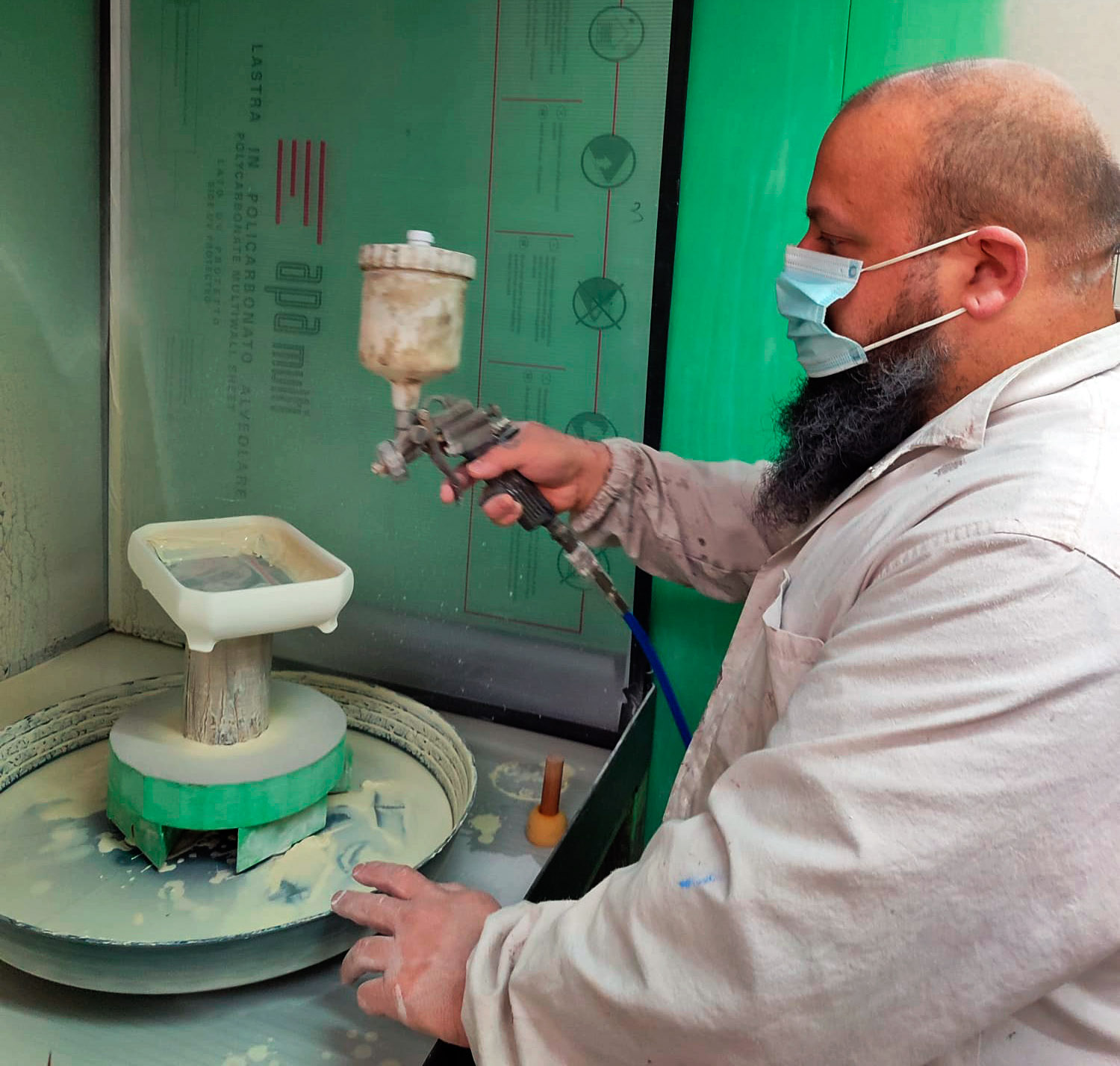
SQ: We prepare our glazes with the aim of creating different textures to make each pot unique. The textures can vary from fake stone to enamel casting. The most used by us are antique and marbled glazes.
Gas, electricity or wood-fired kilns?
SQ: We use a gas oven handcrafted by my father.

I like to search for various clays in the mountains in order to create pots
Samuele Quarena
What do think of the Japanese glazes, tones and shapes?
SQ: They are the history and tradition of a past but you can have a new future and new innovation in both shapes and glazes. The history and tradition must not be forgotten.
Do you want to learn from Japanese pottery?
SQ and GBQ: We would certainly love to go and visit the great Japanese kilns to discover the techniques that are different from ours.
Do you think handmade pots are appreciated and valued?
SQ: As we see it, the craftsmanship and creativity are always appreciated as a work of art and a unique piece. Mass-produced pots, however beautiful they may be, come from a mould, while the unique piece is individually made and customised for the buyer. This is precisely the philosophy we aim for.
Any other interests or hobbies besides bonsai pottery?
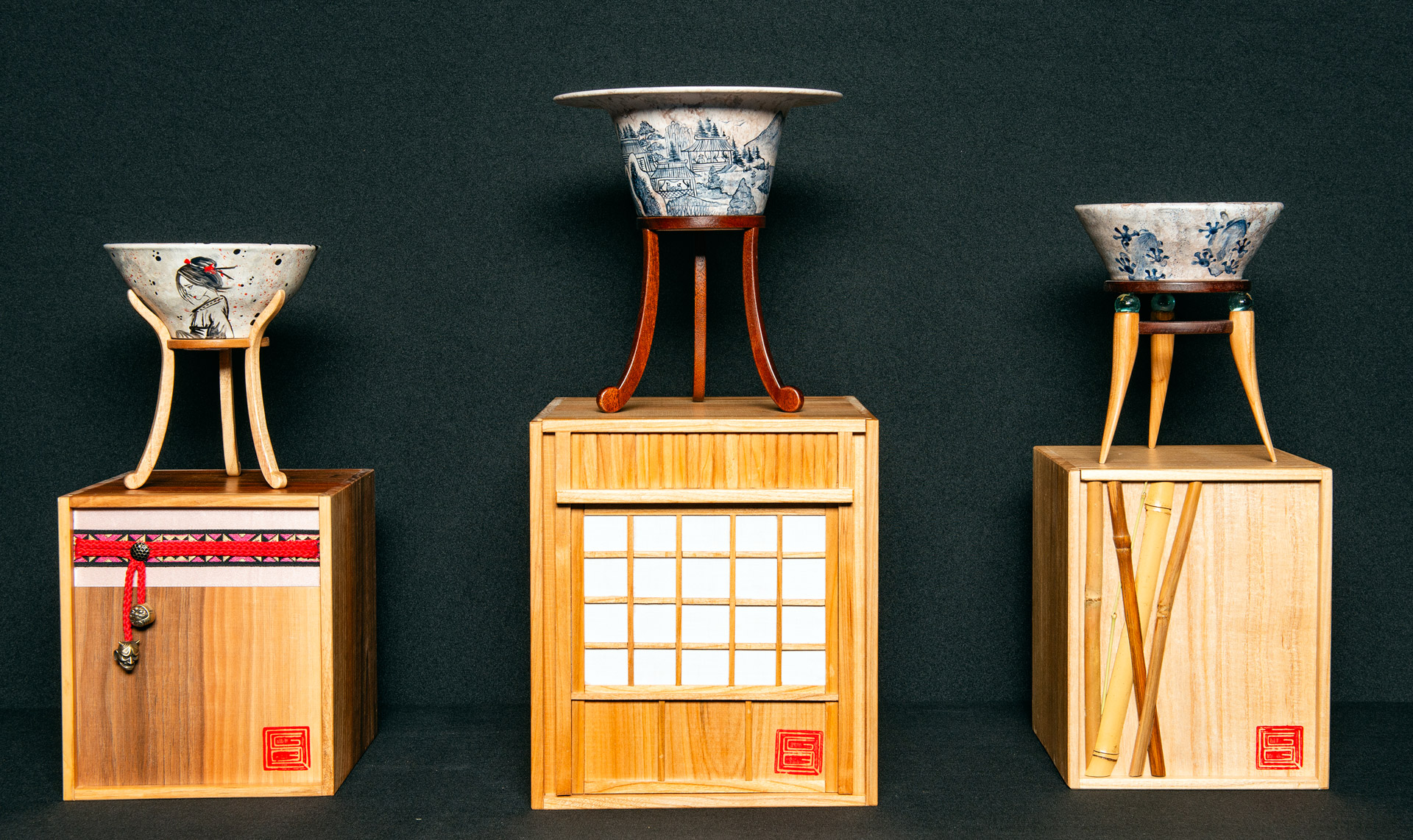
SQ: Another activity that unites us is the creation of tables integrated into the pot with fine wood to personalise and to enhance it. We create decorated or carved so-called Kiribaku, or boxes, for pots. And we make ceramic tempay with the respective Kiribaku box.
What, or who, inspires you?
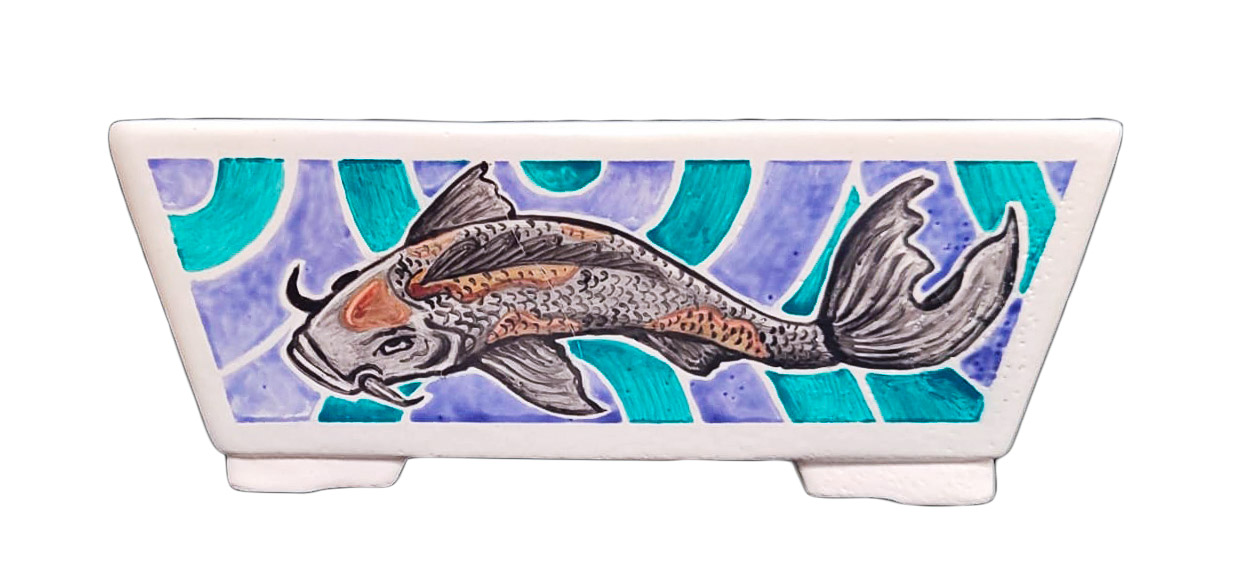
SQ: The inspiration for decoration comes from traditional Japanese illustrations, which show abstract mythological figures. At the customer’s request, we decorate and shape the pot as is the tradition in Japan.
What do you like about bonsai and making pots for bonsai?
GBQ: I like to create new shapes and new styles to make each pot unique.
Moulds, slipcasts or hand shaped, which do you prefer, or what do you think is the better?
GBQ: We use no moulds or casts. The creation of each single pot (hexagonal, rectangular, square, oval, etc) is done with clay sheets, while the round pots are made with a pedal lathe as is the traditional ancient Japanese method.
Can you make a living out of bonsai pottery?
SQ: It is possible while maintaining high standards of craftsmanship and quality.
What was the most difficult or time-consuming pot you have ever made?
GBQ Making a large hexagonal vase with eight different firing types. One firing for each colour tone.
Can you tell us something about the technique you use to paint the pots?
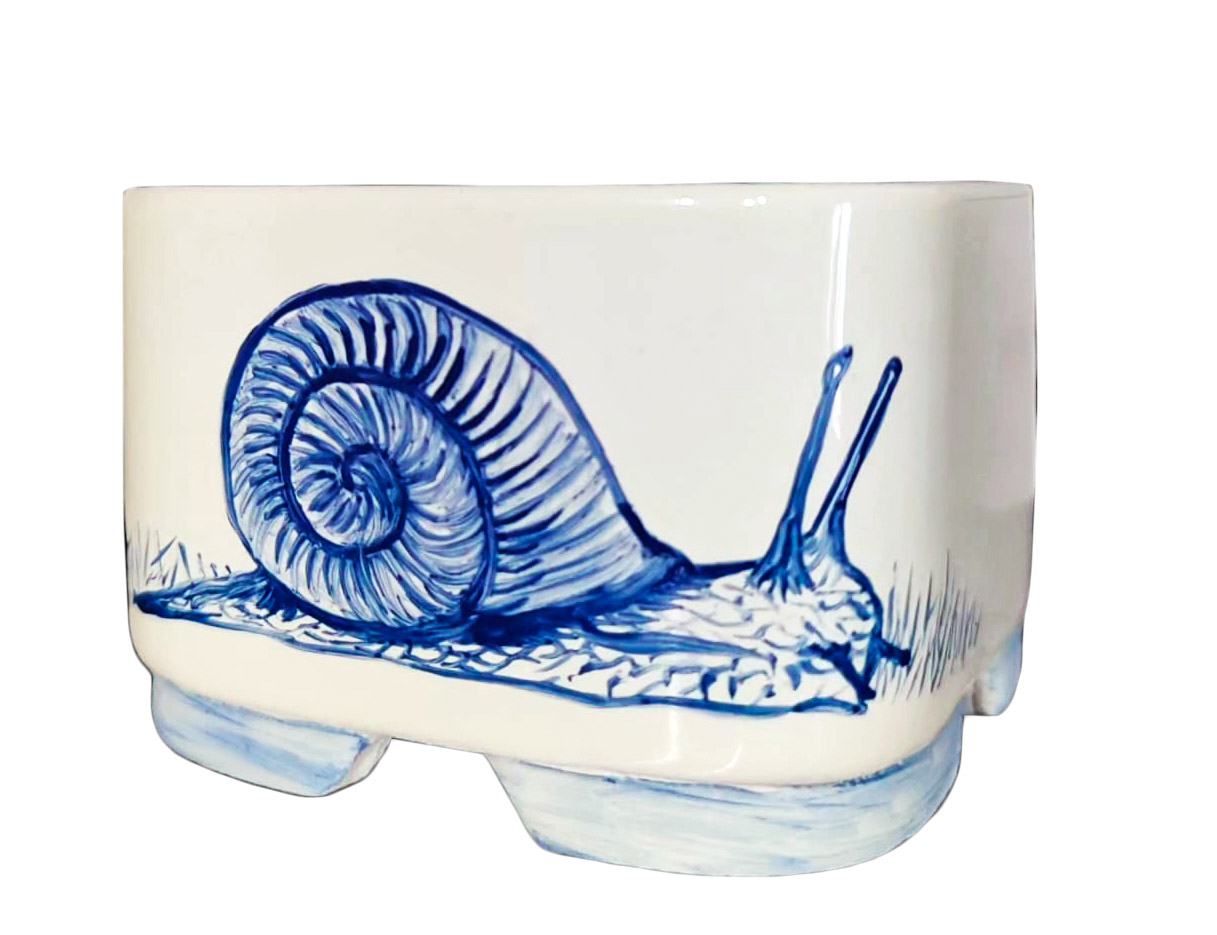
SQ: All the decorated pots we make are done by so-called ‘Third fire’, that means first the clay firing, followed by an enamel firing and, finally, after decoration, they are fired again. Also we use the highest quality powder pigments and some of the pigments even have 24 kt gold.

Our style is traditional Japanese, but we enjoy creating abstract designs, cartoons and other decorations on our pots
Samuele Quarena
Do you have any education in drawing or painting?
SQ: I have always been passionate about drawing, whether with pencil, brushes or airbrush. School and plenty of practice have helped me to improve over time.
GBQ: I too have always had this desire to paint and the academy contributed to an improvement in my path.

Samuele Quarena (41) & Giovan Battista Quarena (71)
Giovan Battista Quarena
- Born in: Gavardo (BS), Italy
- Partner: Marina Moretti
- Children: Samuele and Stefano
- Education: Degree of the Academy of Fine Arts
- Profession: Retired carpenter, sculptor, painter and potter
- Into ceramics since: 1970
Samuele Quarena :
- Born in: Gavardo (BS), Italy
- Partner: Angela Bresciani
- Children: Matteo and Michele
- Education: Degree, High School in Art
- Profession: Painter, decorator
- Into bonsai since: 2002