


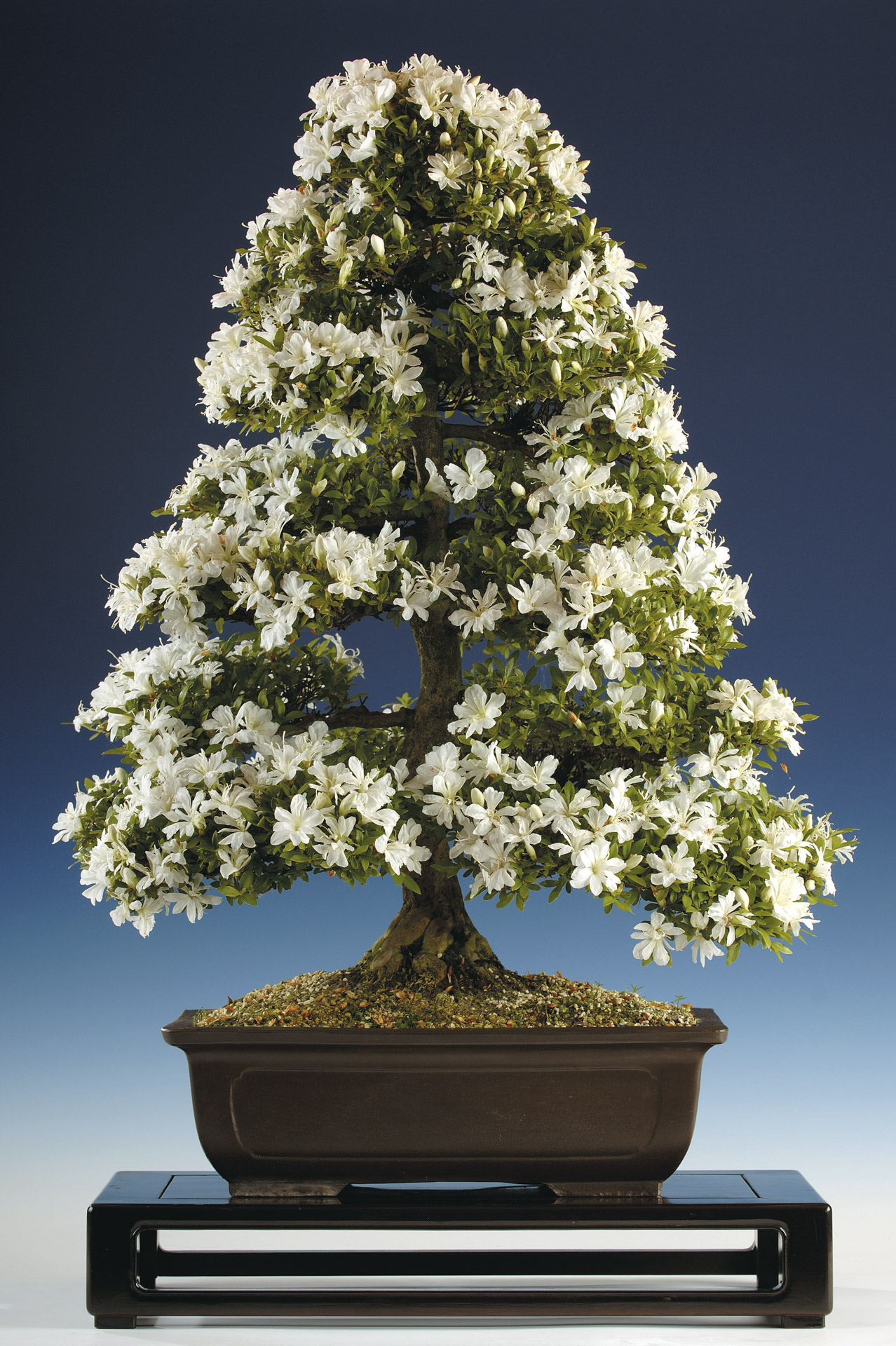
CHOKKAN (formal upright style)
The trunk is straight and tapers toward the top. The branches of the bonsai must gradually become shorter and thinner from the bottom to the top and be horizontal compared with the trunk, or bend slightly downwards. The roots at the base of the trunk are nicely spread. The whole composition must be in balance with the trunk and the pot.
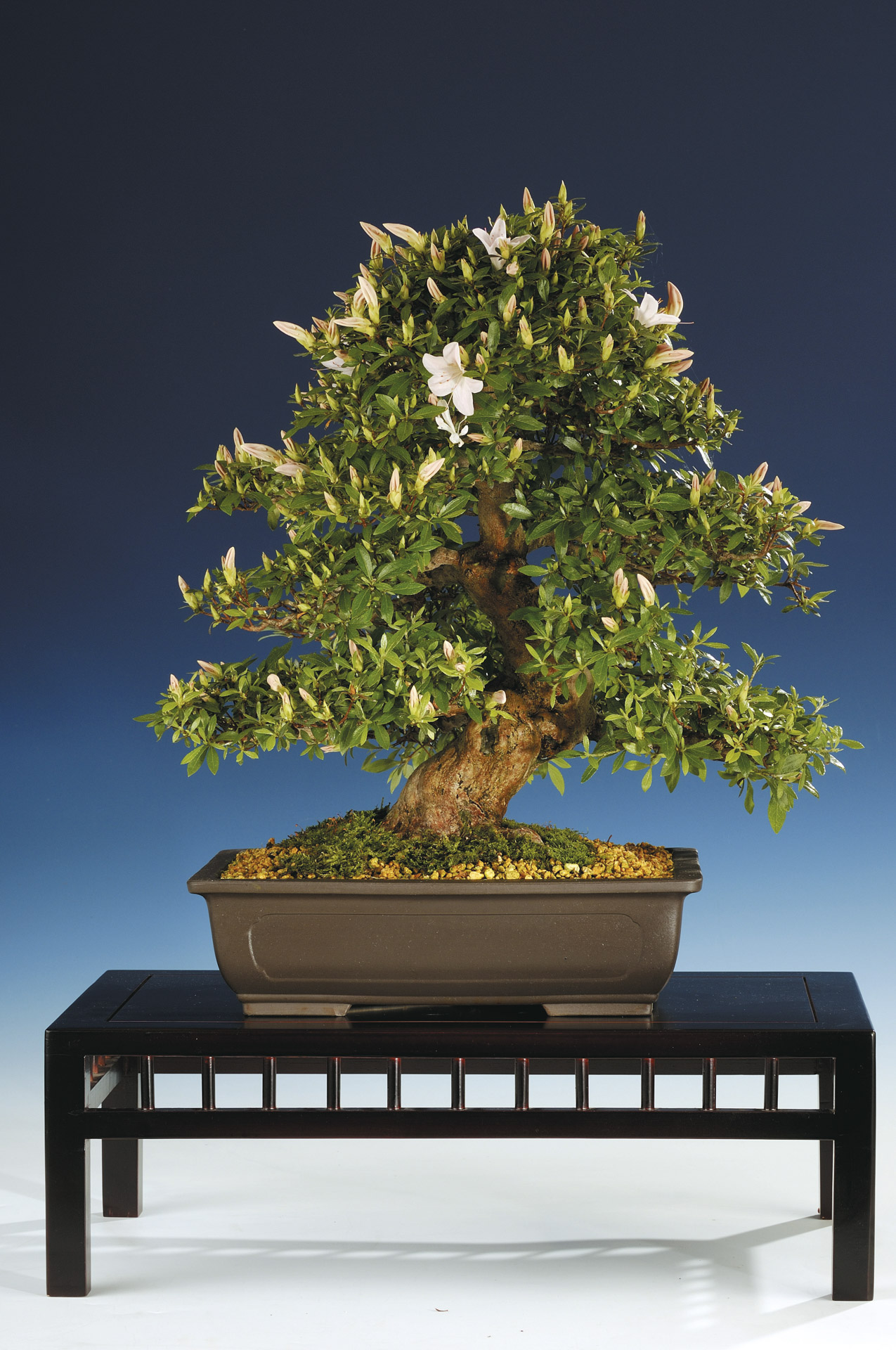
MOYOGI (informal upright style)
The trunk is slightly bent and tapers toward the top. The top of the tree is straight above the base of the trunk. The branches are distributed asymmetrically. The lower branches must be placed at the outer side of the curves or bends.

Repeated ‘S’ style
This style, non-existent within the large number of varied bonsai styles, probably has its origin in that a branch is maintained on each outside bend. Thanks to this, the clusters of Satsuki flowers are shown in a way that is stunning. They aim to reach the desired trunk height, therefore giving hardly any time for the trunk to become thicker.

SHAKAN (slanting style)
In Nature a tree can lean to one side when there is a prevailing wind direction, or when a tree is standing in the shade and growing toward the light. In the slanting style, the trunk bends along its entire length to the left or to the right. The trunk can be both straight and curved. Very strong roots grow in the direction of the inclined trunk. In this way, the roots under the inclined trunk are pressed into the ground. This gives the impression that the bonsai is firmly anchored in its pot.

SOKAN (double-trunk style)
A double trunk occurs if a tree develops two trunks out of a single root base. The junction of the trunks at the base must be sharply “V”-shaped and not “U”-shaped. One of the trunks dominates because of its length or thickness. The smaller tree must be no more than two thirds the height of the larger. Together they form a common crown, just as we see in Nature.

FUKINAGASHI (windswept style)
You should imagine this style as a tree through which wind is blowing at this moment. The main branches stay in position; only the thin branches and leaves position themselves according to the direction of the wind.

BUNJINGI (‘literati’ style)
This strange style is characterised by a thin slender trunk with only a few branches. The lower branches are often dead and barren, but the trunk itself is very full of character. The style owes the name ‘literati” to the paintings of old Chinese artists, who would reproduce a tree in an almost abstract way. It is characterised by elegance and grace.
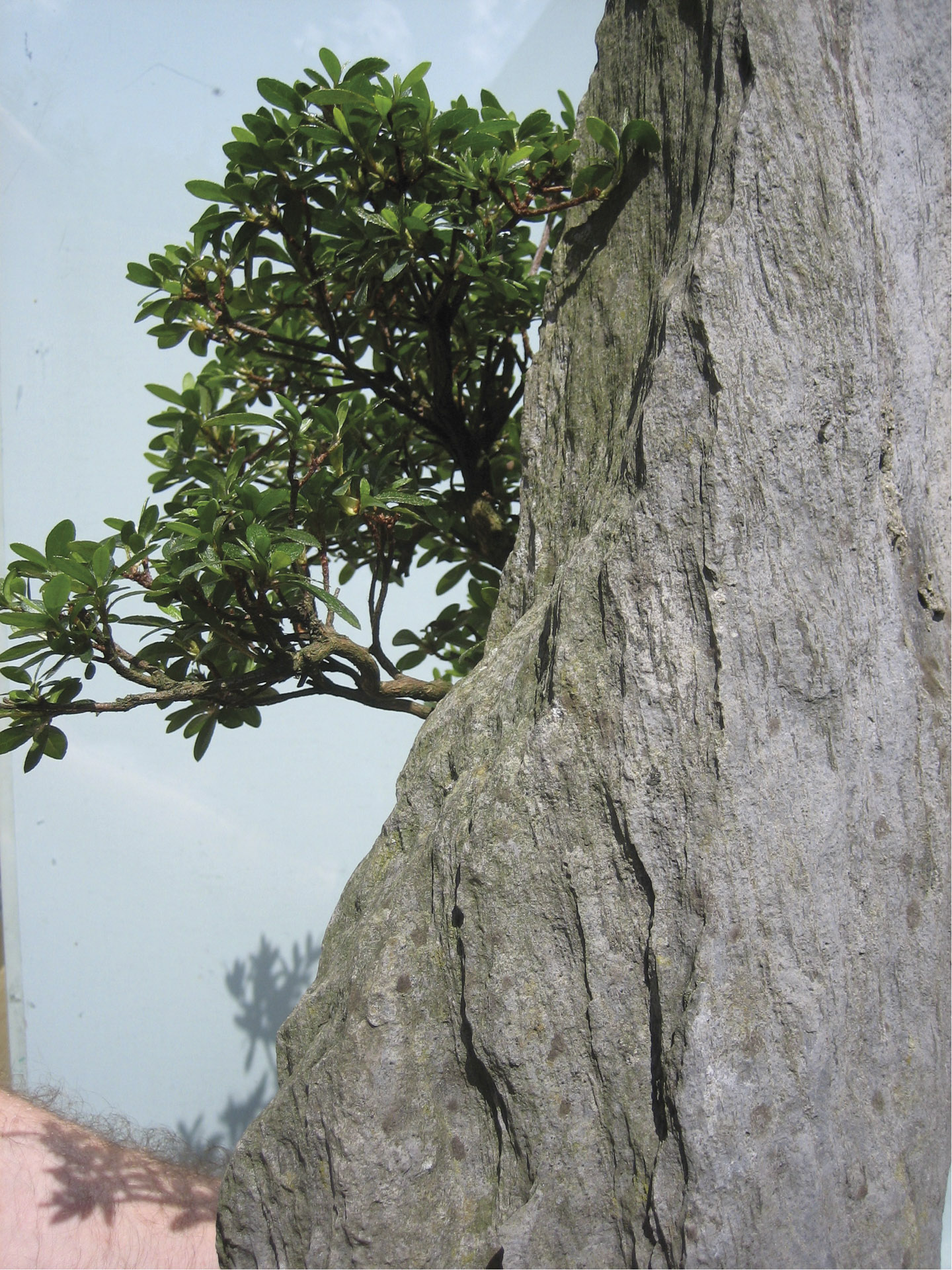
ISHITSUKI (rock-clinging style)
This is a planting where the tree grows on a rock, or the roots cling to a rock in a small crevice where there is a little soil.

SEKIJOJU (root-over-rock style)
This rock planting is where the roots grow over the rock and disappear into the ground.

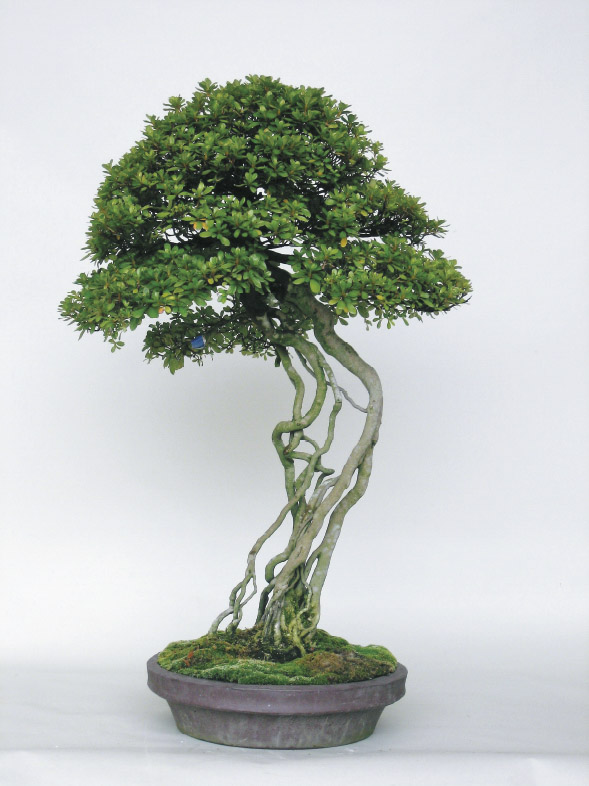
NEAGARI (exposed-root style)
The roots of the neagari emerge above the surface of the soil. These uncovered roots give the impression that the tree has been exposed to soil erosion for many years.

KENGAI (cascade style) & HAN-KENGAI (half-cascade style)
In Nature, this tree grows on a rock face and, because of snow and wind, it first grows downwards and then upwards again.In Kengai the leaves grow lower than the pot. In Han-Kengai they don’t.
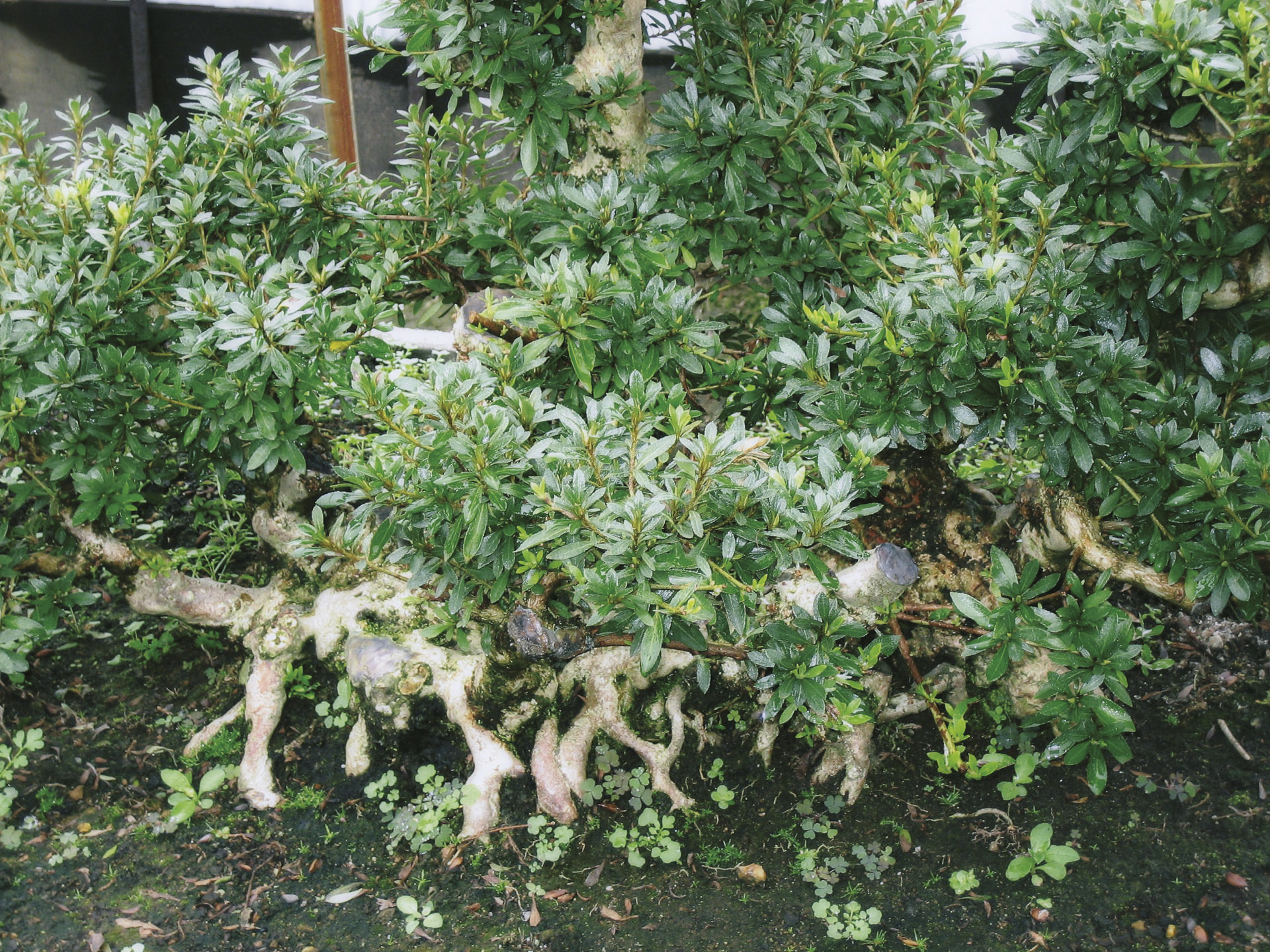
IKADABUKI (raft style)
This style represents a fallen tree, with the trunk buried under the soil. The branches at the top of the fallen tree grow straight upward as trunks.

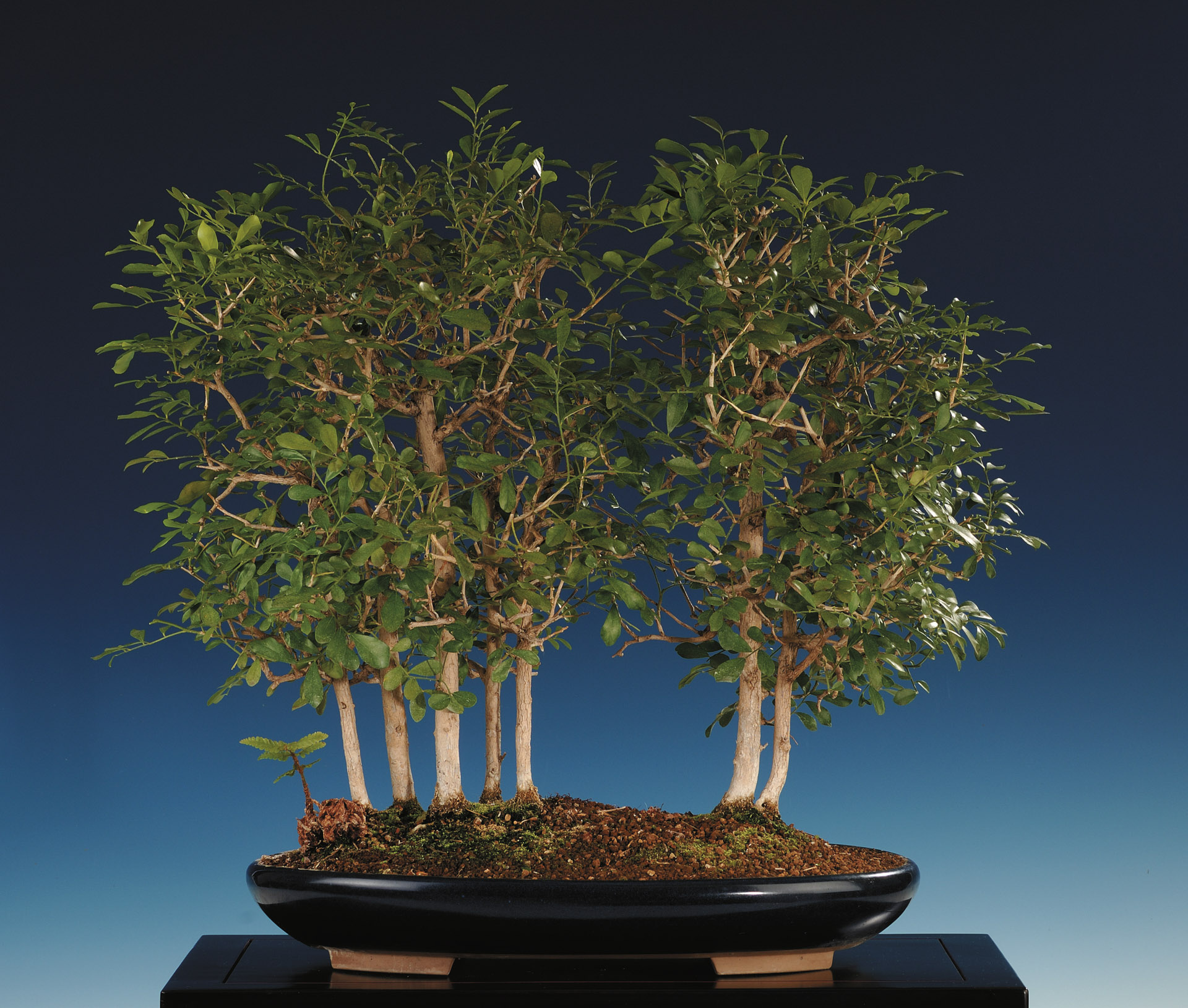
YOSE-UE (forest-group style)
We can see this style as a small forest in a flat pot. It should create the illusion of a miniature version of a forest. Satsuki are used to copying a forest in bloom. If Satsuki are used for group cultivation, all trees should be of the same type. The distances between the trees should be different. Do not place three or more trees on the same line. The trunks should vary in thickness and height. The number of trees in a smaller group cultivation should be uneven. Though if more than 15 trees are used, it is not so important to stick to uneven numbers.


