Spaces between branches and around the trunk are very important design tools
What do these open spaces achieve in bonsai design? Each bonsai is characterised by two dominant empty spaces:
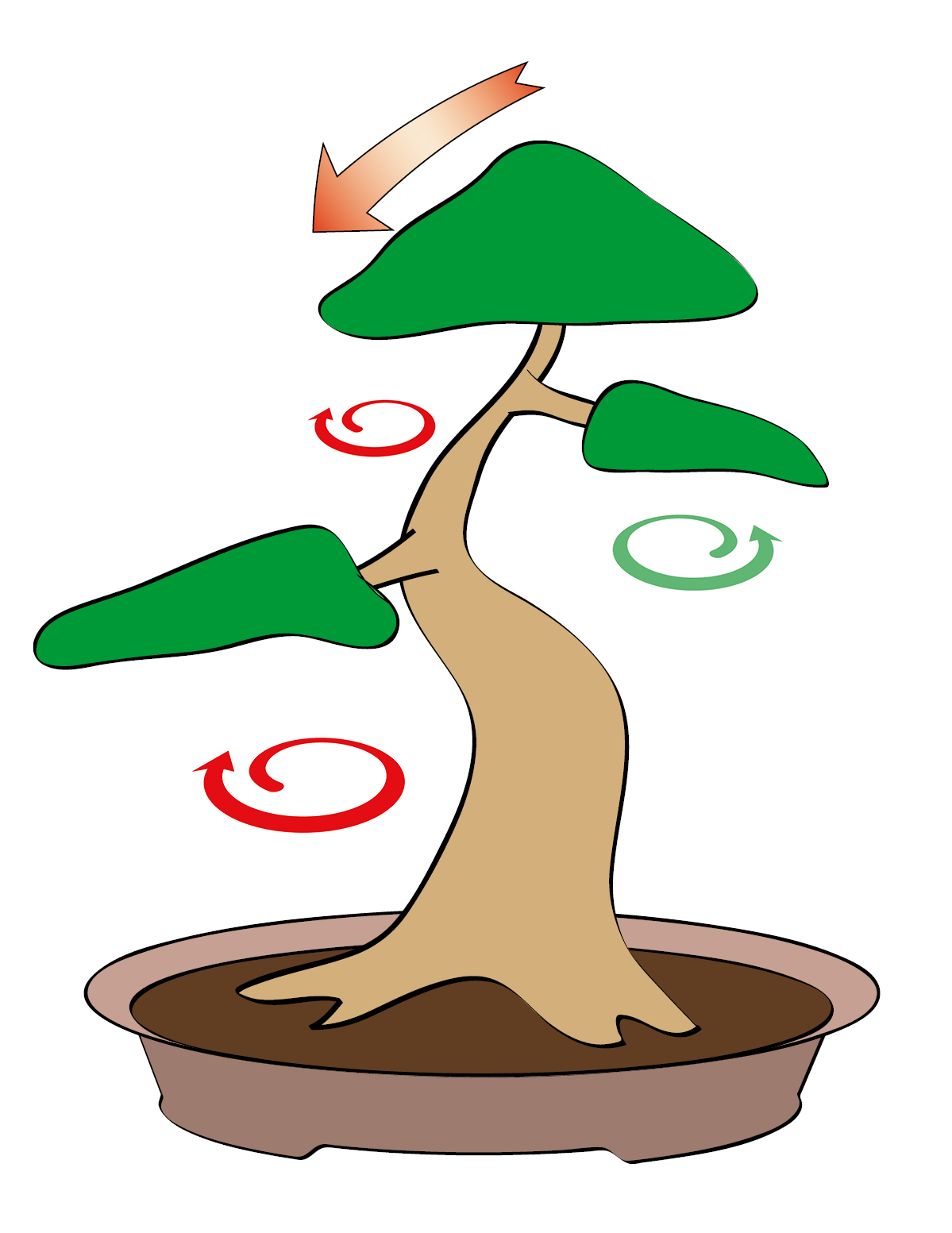
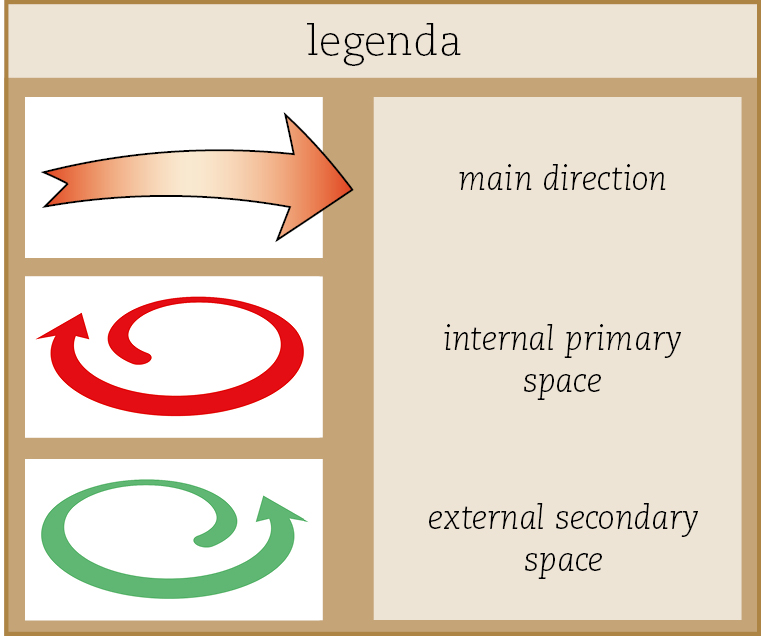
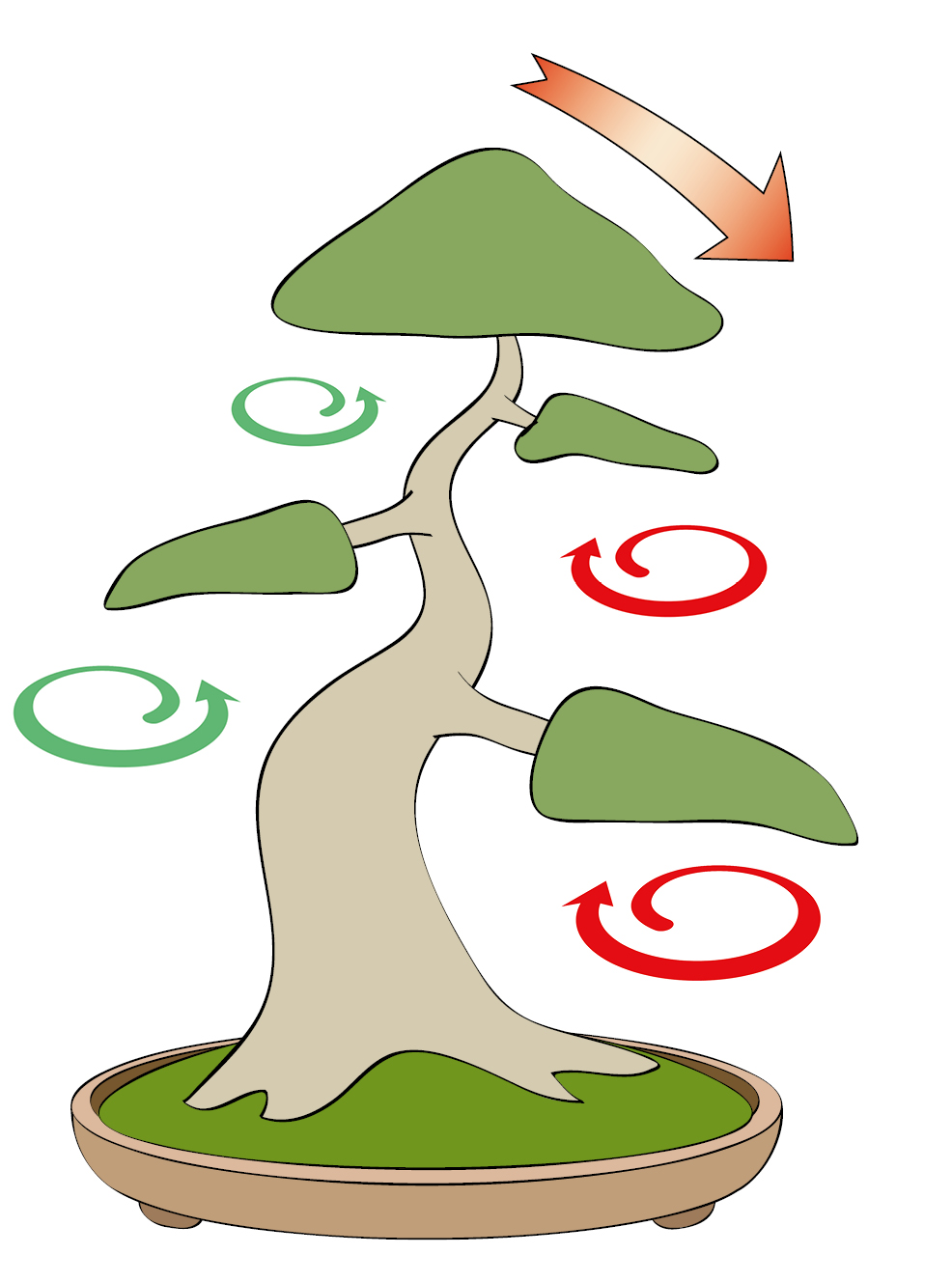
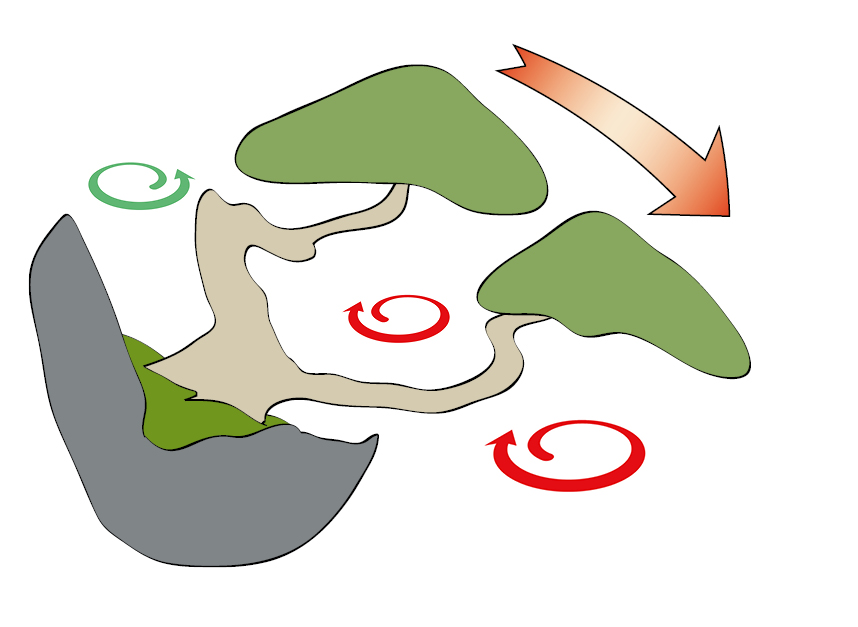
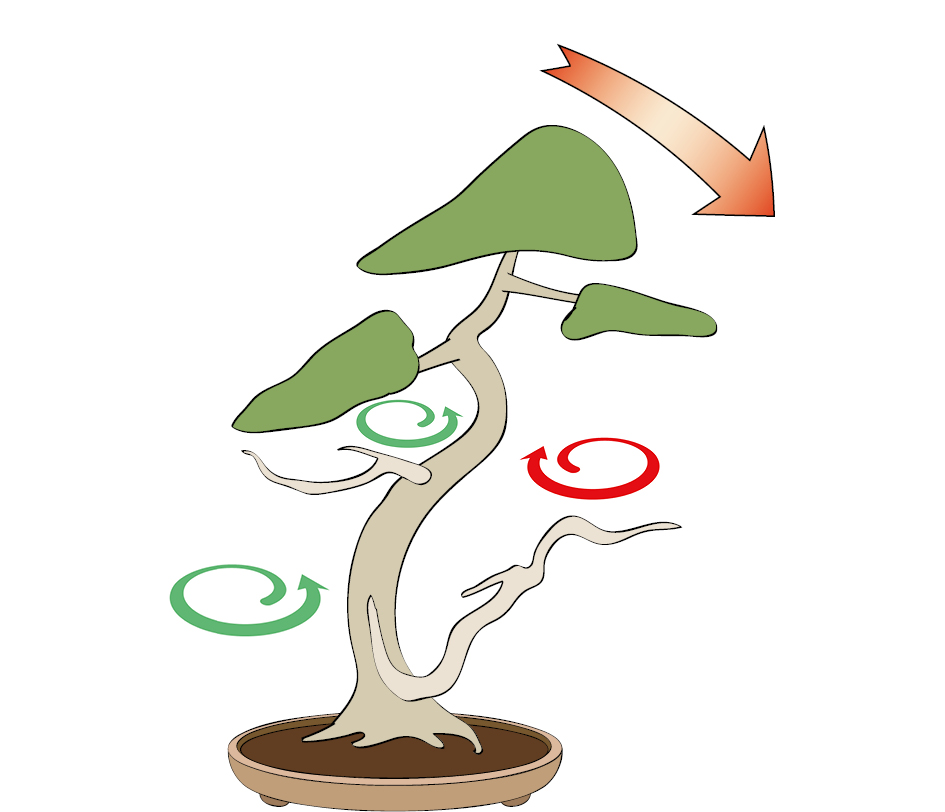
Internal Primary Space is defined by the ground surface, the edge of the trunk that follows the movement of the tree and the extending branch, which gives this movement.
External Secondary Space is the opposite; it is always against the movement of the tree. These spaces are sometimes big, sometimes not. The interior space can be the larger, sometimes it is not.
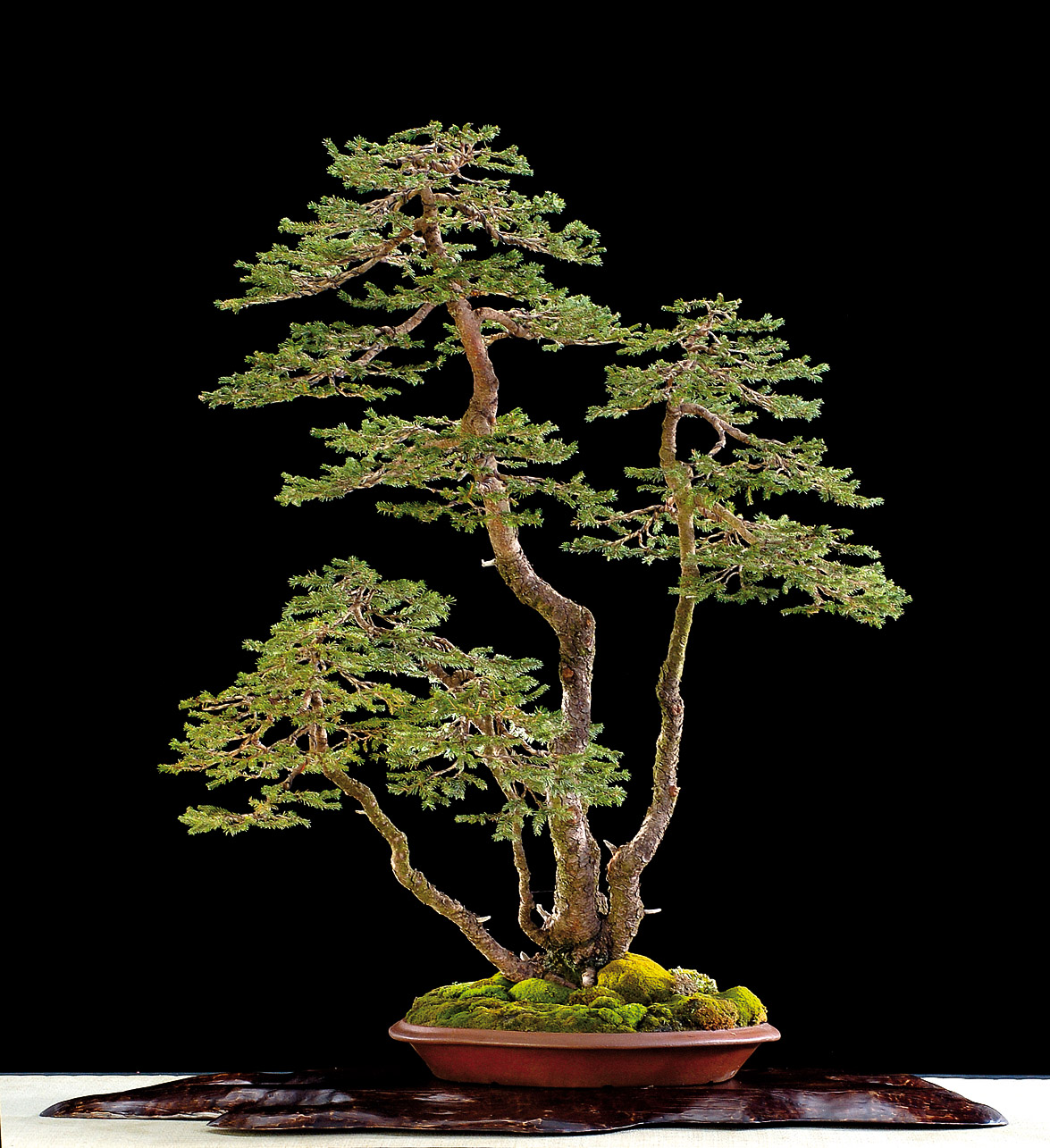
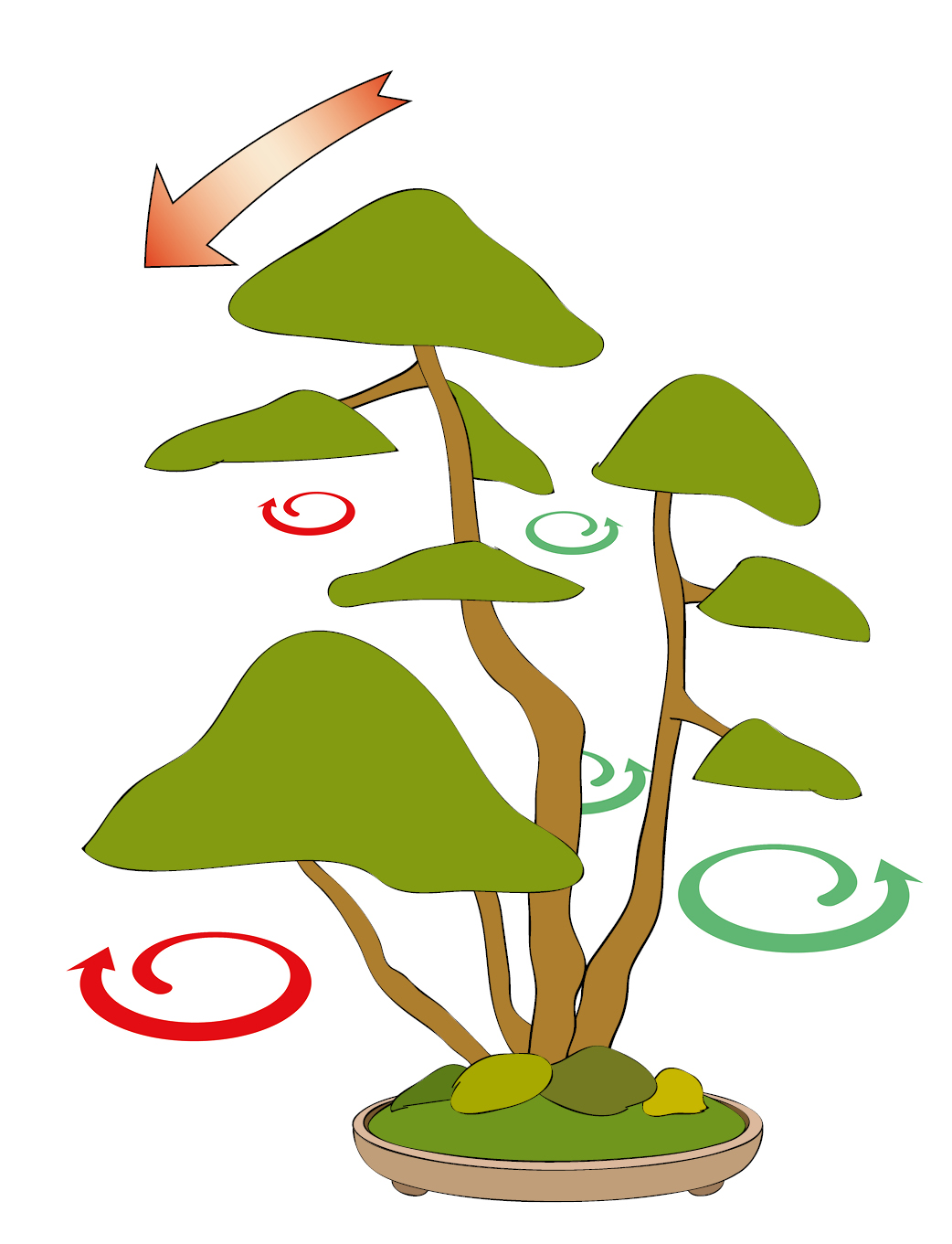
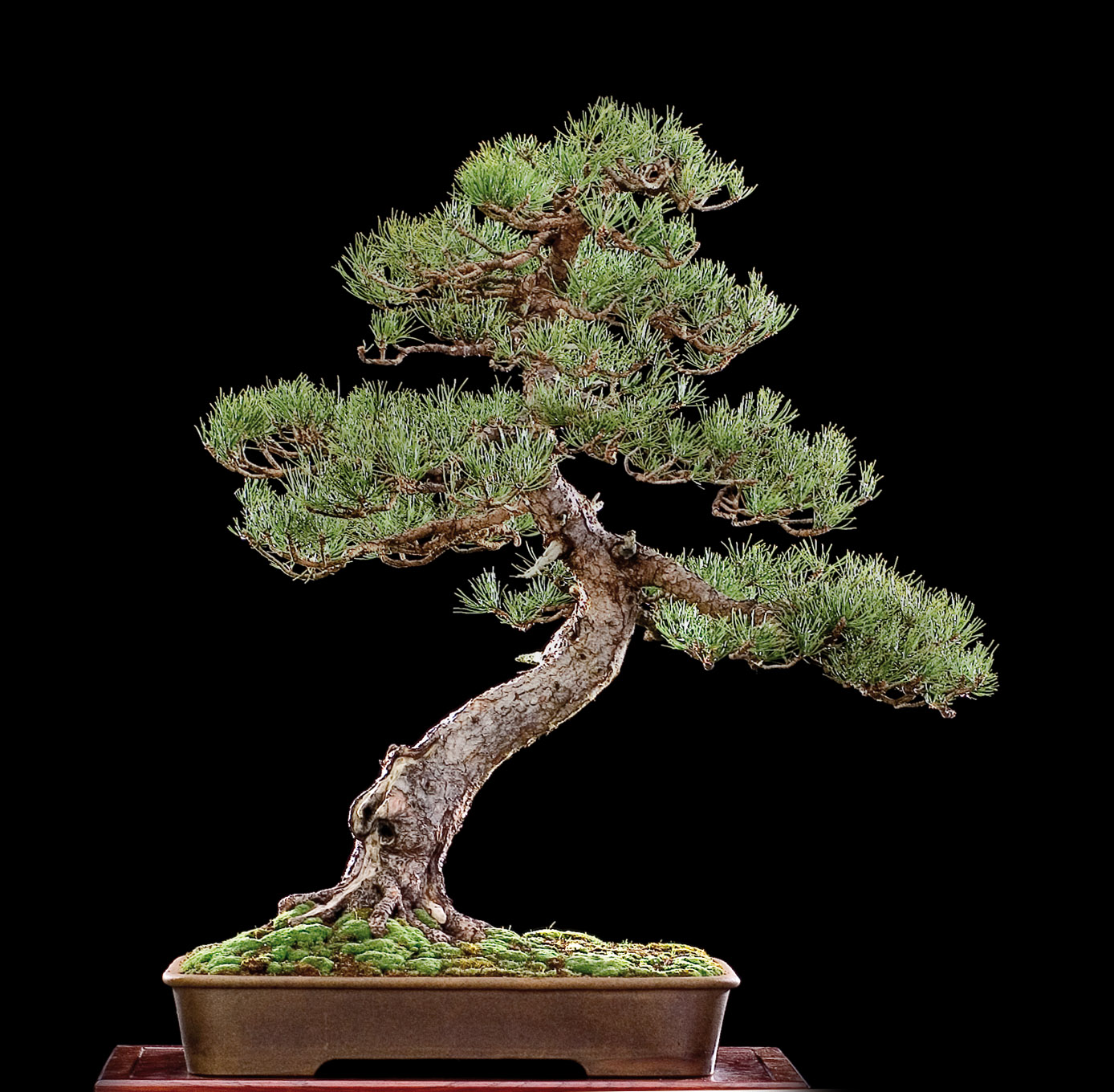
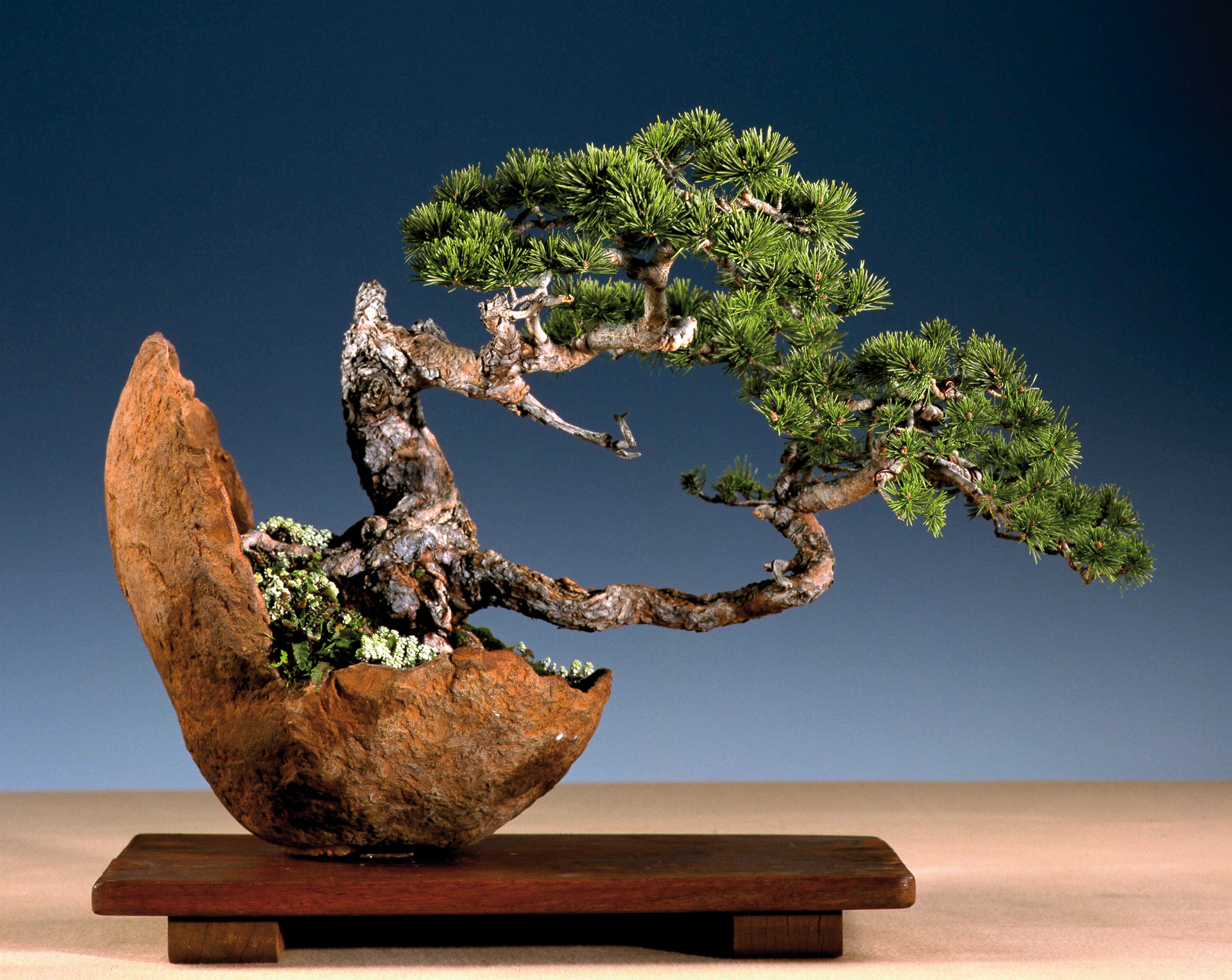
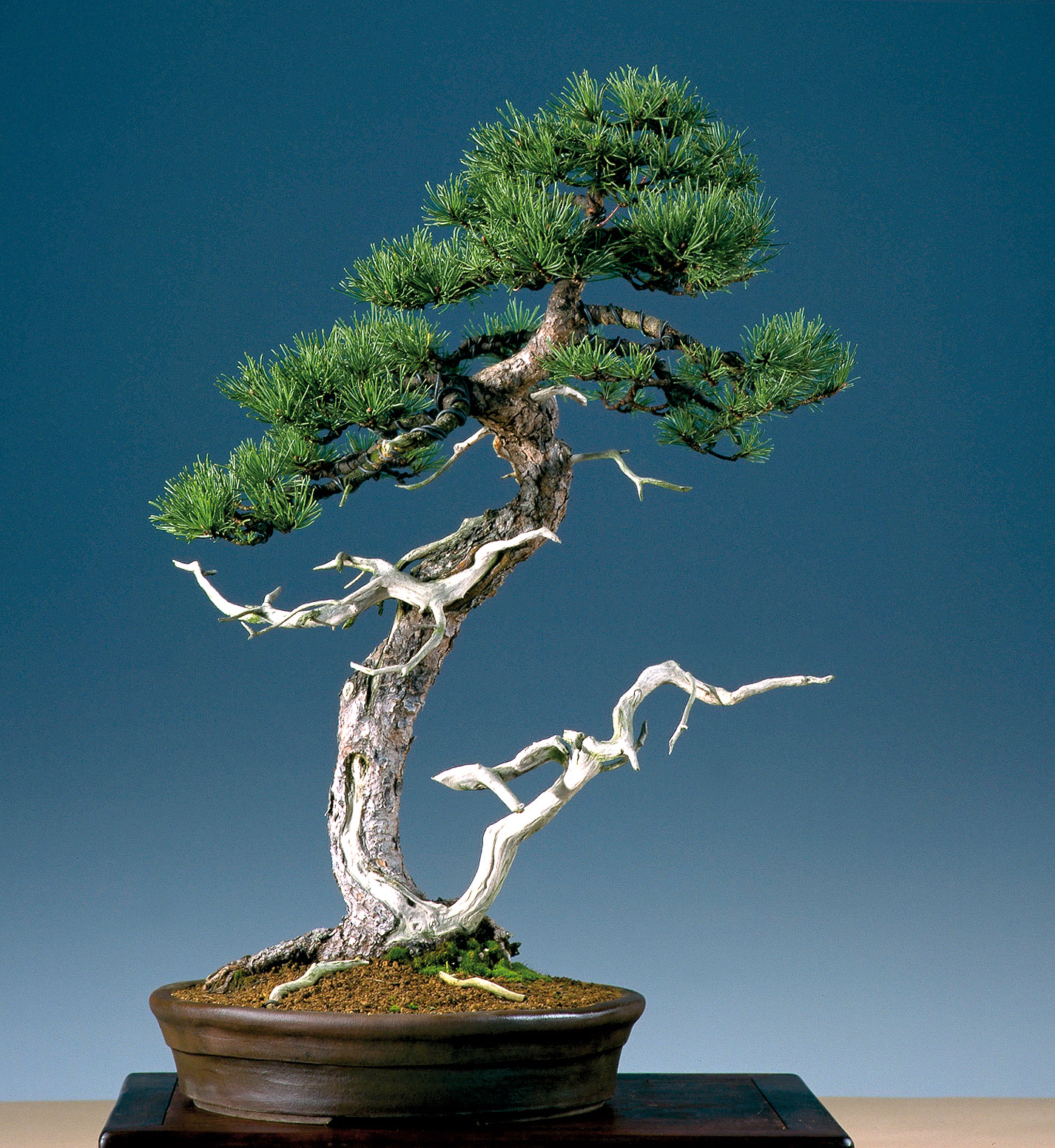
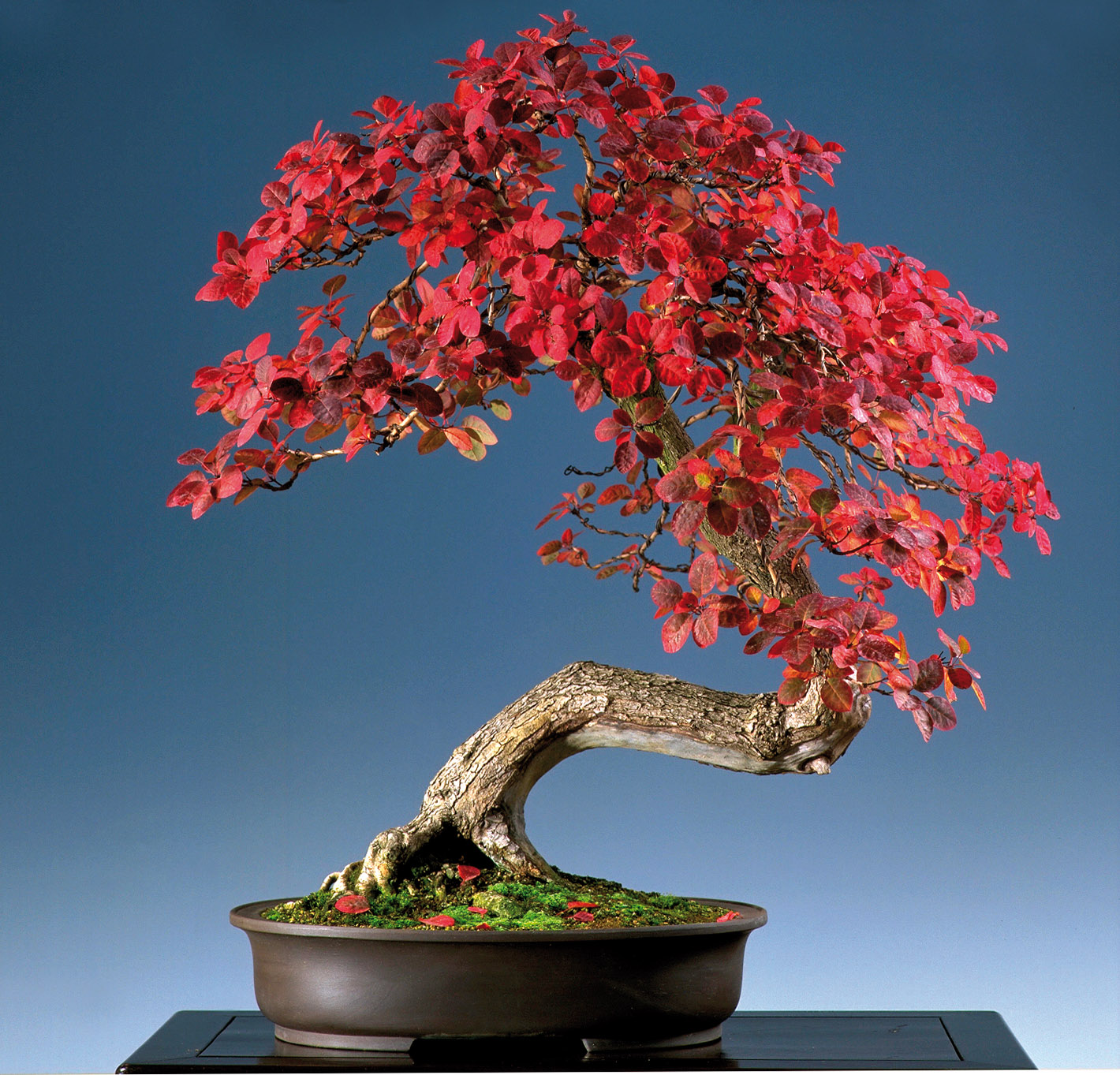
To define the movement of the tree remember that it must be in agreement with the slope of the trunk, the direction of the apex, and that of the extending branch. You can see in the diagram (right) what that can do. The principal open space is on the left because the movement of the tree is on the left. Indeed the apex moves towards the left, as does the trunk and the large extending branch. But what is interesting is that there are many small subdivisions of space to the main and secondary spaces. These small irregular spaces give life to the tree.
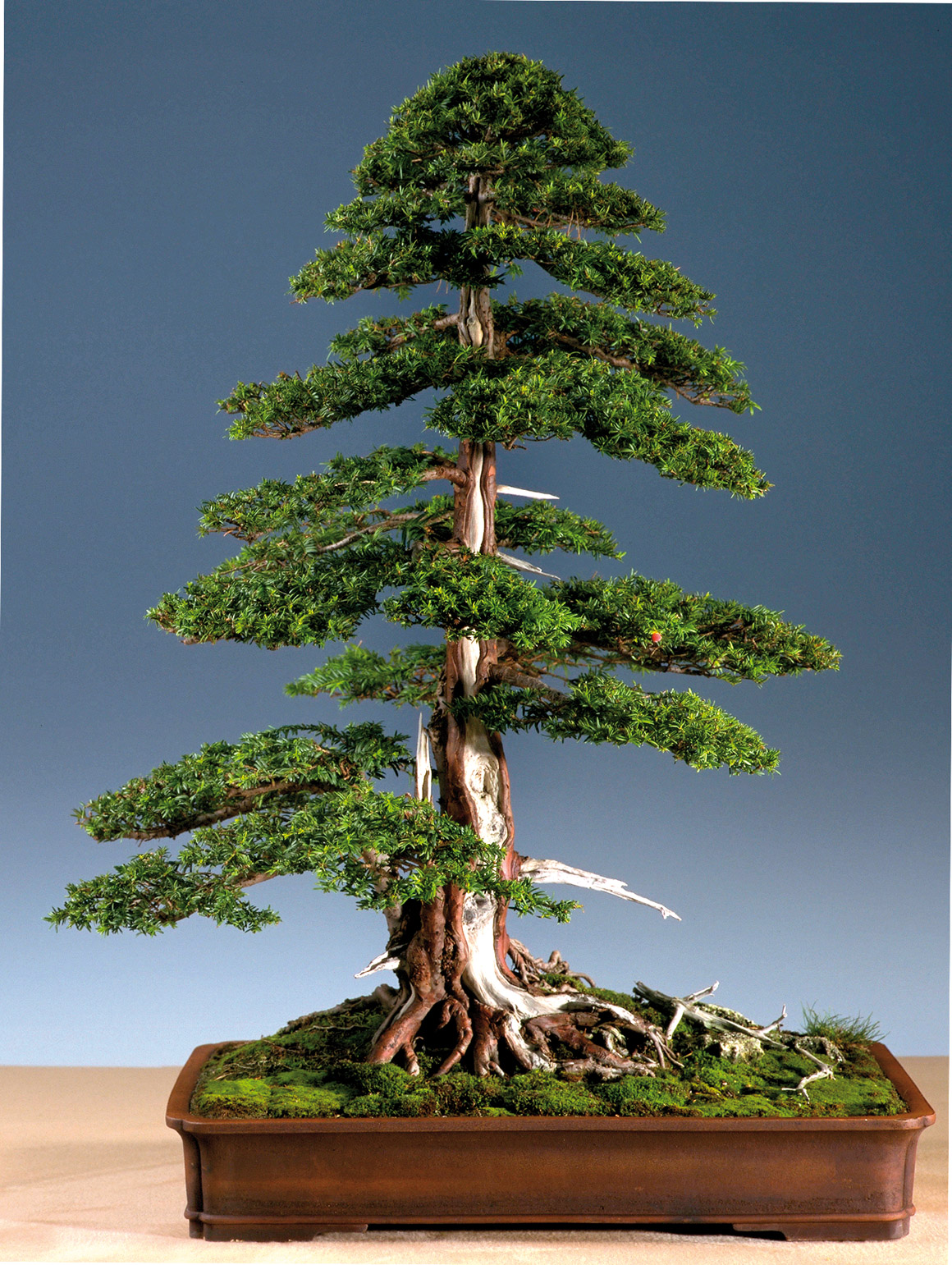
All open spaces that offer symmetry and repetition must be avoided. Others are acceptable and necessary. Note that the most beautiful open spaces can be found in rugged trees, as you can see in some of the examples shown here. One seeks the open space principal on conifers. Apply this principal to your trees — seek out these open spaces and you will find them.
We use cookies on our website to give you the most relevant experience by remembering your preferences and repeat visits. By clicking “Accept”, you consent to the use of ALL the cookies.
This website uses cookies to improve your experience while you navigate through the website. Out of these cookies, the cookies that are categorized as necessary are stored on your browser as they are essential for the working of basic functionalities of the website. We also use third-party cookies that help us analyze and understand how you use this website. These cookies will be stored in your browser only with your consent. You also have the option to opt-out of these cookies. But opting out of some of these cookies may have an effect on your browsing experience.
Necessary cookies are absolutely essential for the website to function properly. This category only includes cookies that ensures basic functionalities and security features of the website. These cookies do not store any personal information.
Any cookies that may not be particularly necessary for the website to function and is used specifically to collect user personal data via analytics, ads, other embedded contents are termed as non-necessary cookies. It is mandatory to procure user consent prior to running these cookies on your website.
Send me the newsletter.
You can cancel your Bonsai Today membership at any time, and you will continue to have access to Bonsai Today through the end of your billing period. To cancel, go to the ‘Members‘ page and click on ‘Cancel‘ in My Memberships.