


The tree burns all its reserves at
high speed.
Strong push of growth at the roots

Needs of the tree
Always give plenty of food for growth. Pinching of spring or metsumi (to ramify and decrease the size of the leaves); wiring; fertilising. Water every day.

Placement
The leaves develop very quickly. The small branches start to lengthen very well. The roots have the capacity for maximum absorption. Azaleas are in flowers.

Fertilizing
It is this month that it’s necessary to give the maximum amount of fertiliser to non-mature plants. You can also increase the amount of fertiliser for established bonsai. On the other hand, don’t give too much nitrogen to trees in flower.
Watering
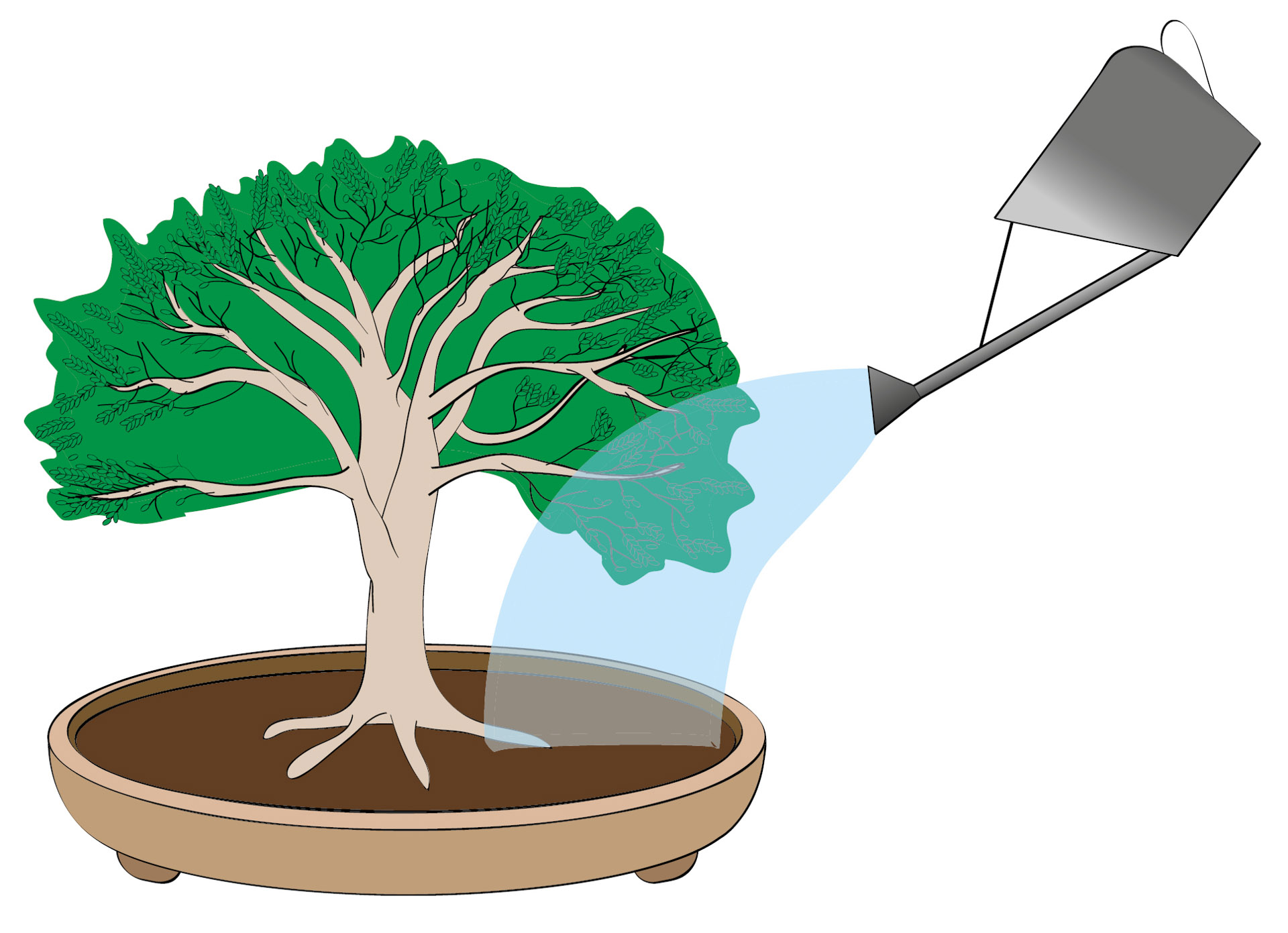
Amply spray trees in formation. Give lots of water every time you spray the trees. Make sure the pots have good drainage for when it rains. In particular, pay attention to the roots, which can block the drainage holes. Slope the pots at the time of heavy downpours, then lie them horizontally after the storm so that water does not accumulate in the lower corners. For mature trees moderate watering to prevent the leaves or needles from growing too much.

Treatment
Watch out for external parasites. Keep an eye on the roots in case they rot due to an excess of water in hot weather. Keep soil mix well drained and aerated to avoid this.

Activities
- Spruces: pinch buds with the fingers just before they shoot Maples: possible defoliation at the end of the month — only the strong trees, every other year. Remove only the strong leaves, not those that are very weak. Wire after defoliation and styling.
- Hornbeams: pinch new small branches. When they have 3 or 4 well-developed leaves, cut the remainder.
- Azaleas: when 70 % of the flowers have faded remove all of them, including those that are open, or soon will be. You will be able to fertilise them with nitrogen after this task is completed. The general rule for all trees with flowers or fruits is not to give too much nitrogen at flowering or fruiting time. Prepare for next year’s flowering in the autumn with a rich fertiliser of P and K. You can give flowering trees nitrogen after flowering and also fruit trees once the fruits are established, but not too much.
- Japanese black pine: Take note, this is the only pine that can benefit from the following technique: At the end of May, pinch the medium candles. Remove them leaving some needles at their base. 15 days afterwards do the same thing with the strong candles. Don’t do it to our European pines with two needles, or the five needle pines. Work the opposite way round by initially pinching the strong candles!
- Pinus sylvestris, mugo, etc: pinch the candles just before they open, to balance the strength of the small branches. Starting with the strong candles pinch down to a third; 10-15 days later pinch the medium candles by half. These pines should be checked each day so as not to miss this pinching process. Never touch the weak candles.
- Tropical trees: In the South of Europe you can start to put them outdoors. The trees known as interior are only indoor trees in the winter. As soon as the average temperatures are above 18-20C you can leave them outside. The great majority of these trees tolerate plenty of sun, just as in their countries of origin. You can begin to work on your tropical trees.
- Leafy trees: Don’t make cuts too severe because they can weaken the tree by loss of sap. It’s the same thing with conifers.
- Conifers. Prune the small branches leaving 2 buds to encourage them to ramify in pairs.
- Junipers: it’s still possible to repot.


