
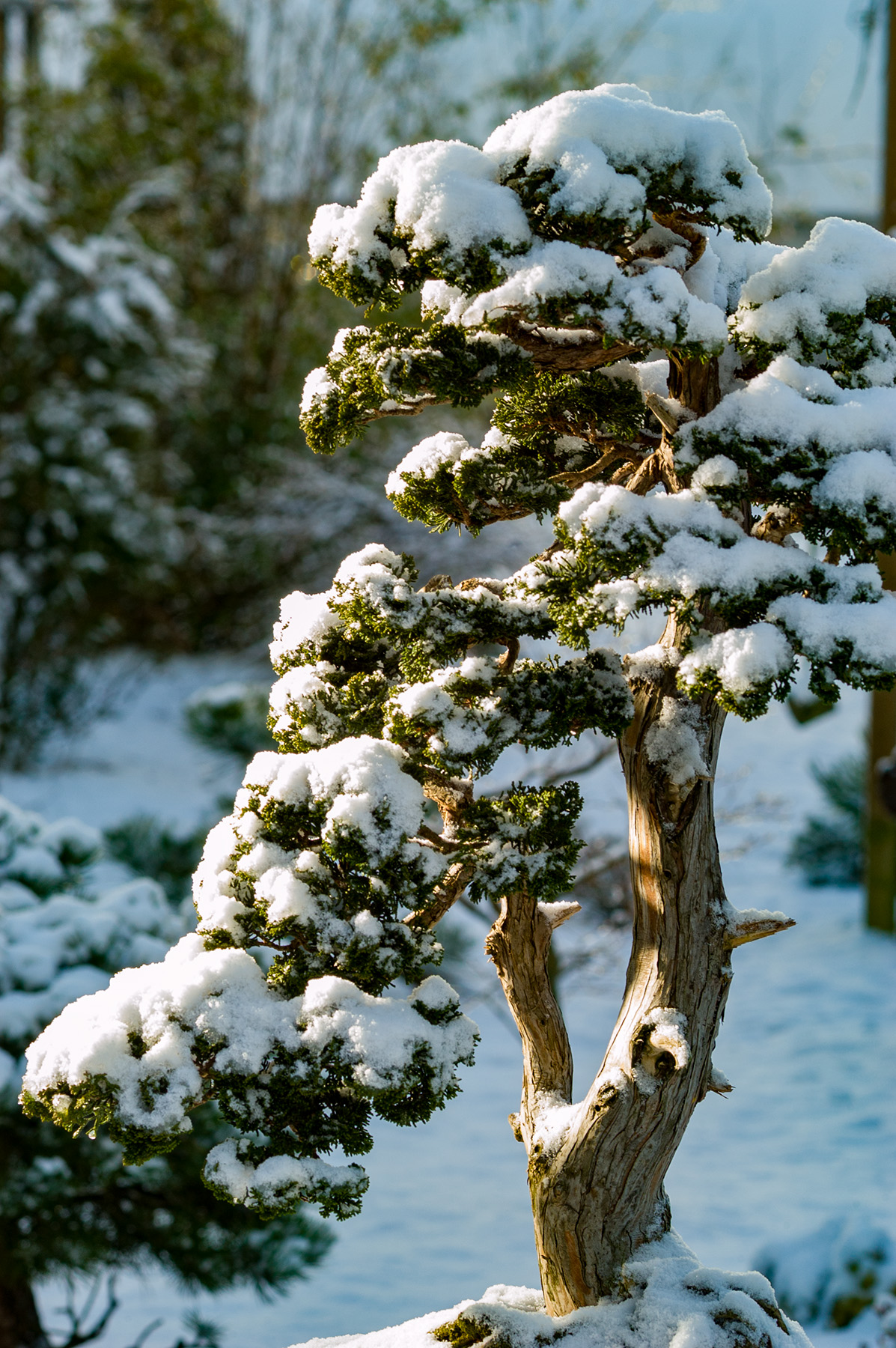

Slight activity. Its places of exchanges are the stomates on the bark of the trunk and the branches.
The roots are also at rest.


Placement
Your trees are at rest. Protect from intense freezing, and prevent the weight of snow from sitting on the branches. Their roots function slightly. They maintain a minimum metabolism with gaseous and aqueous exchanges reduced. Some trees, like cedars, still have their roots growing. So be cautious when it is very cold. The part of the deciduous tree exposed to air is completely inert.

Fertilizing
No fertilisation. Indeed, in the event of sun or heat, especially in a cold greenhouse, roots should be prevented from becoming too active again.
Watering
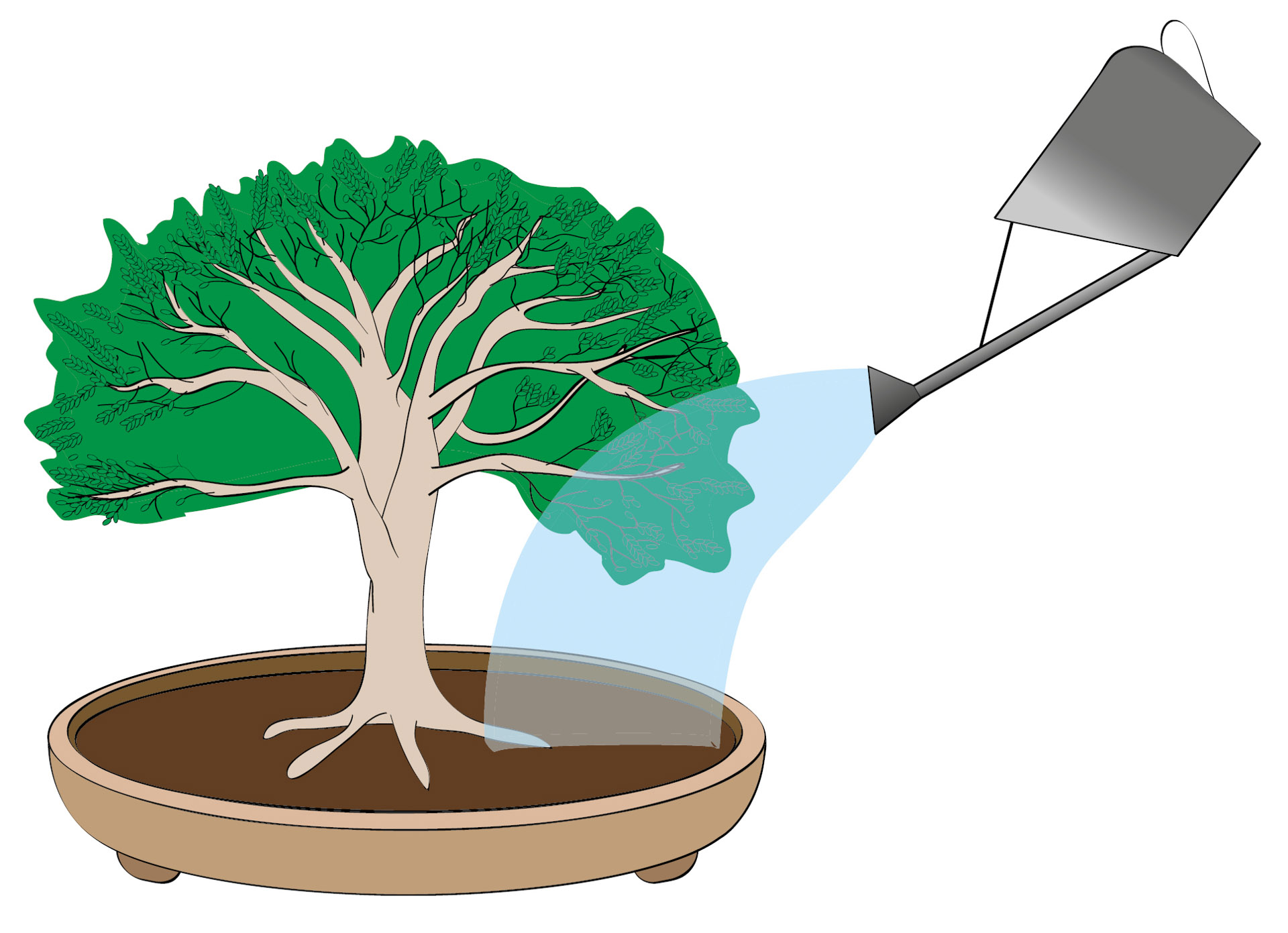
Very moderate, but it should not be forgotten entirely. The roots must not become desiccated. Stop spraying in the event of freezing conditions. Allow the tree to thaw out slowly. Do not spray if a frost is forecast.

Treatment
Clean trunks and branches with a small flexible brush. Remove moss. Possibly clean the scars or crevices with a winter oil treatment to eliminate the larvae of insects. Spray the tree with insecticide. Give the tree a one time only preventive treatment with sulphur + copper sulphate, unless it is freezing.

Pruning
Structure pruning. It’s a question of revealing the silhouette of a tree by creating the broad outline. In particular, you can cut off large branches, like those sacrifice branches left to help enlarge the trunk, the summit, or to close a scar. Apply cut paste to large cuts to avoid contamination from pathogenic fungus. Style pruning. Let’s go over this again as a reminder, because it is different from structural pruning, above. It is carried out in spring and increases the density of the branches that bud in pairs at their tips. Maintenance pruning: This is the one that makes it possible to harmonise the profile of the tree. You can cut all that exceeds the profile, a little like a visit to the hairdresser. One can do this pruning in summer and in the autumn, after strong periods of growth, or just before a bonsai event. Pruning for density: This employs special techniques to provoke back budding, that is, towards the trunk, and on bare wood. It is carried out at the end of spring or autumn.

Wiring
This is possible, but take care because wood is breakable. Be careful in particular with maples, except the dwarf varieties which, on the contrary, are very breakable in vegetative periods (kyohime, kotohime).

Deadwood
Clean deadwood by brushing it. You can apply a mineral oil to disinfect it and destroy pests. You can also bleach it with a jin liquid like lime sulphur. Finally it is the period to work on the wood of the pines and olives.

Activities
- Structure pruning. It’s a question of revealing the silhouette of a tree by creating the broad outline. In particular, you can cut off large branches, like those sacrifice branches left to help enlarge the trunk, the summit, or to close a scar. Apply cut paste to large cuts to avoid contamination from pathogenic fungus.
- Style pruning. Let’s go over this again as a reminder, because it is different from structural pruning, above. It is carried out in spring and increases the density of the branches that bud in pairs at their tips.
- Maintenance pruning: This is the one that makes it possible to harmonise the profile of the tree. You can cut all that exceeds the profile, a little like a visit to the hairdresser. One can do this pruning in summer and in the autumn, after strong periods of growth, or just before a bonsai event.
- Pruning for density: This employs special techniques to provoke back budding, that is, towards the trunk, and on bare wood. It is carried out at the end of spring or autumn. During the winter you can benefit from the spare time to reexamine the articles of your bonsai magazines — Bonsai Focus, in particular. You can also classify your individual photographs, or charts. Don’t forget your equipment: clean, sharpen, and arrange. Prepare your soils for March repotting.


