


Winter pruning. Light watering. No fertiliser. Deadwood carving.
This period is quite dangerous for the trees. Indeed, these few days of warmth are very often followed by periods of cold, even frost. If you don’t protect your bonsai well they won’t be able to resist the cold and may die. At best, having lost a lot of branches as if a drastic pruning had taken place, the tree will struggle to start over again. At worst, the tree will die. The solution is to leave your trees outside during winter only when the weather is suitable.

Some buds can start
to swell a little.
The roots start to grow.

Placement
The weather can be very cold with several consecutive days of freezing. If the soils freeze but the trees are frost-resistant, don’t panic. Leave them just as they are. Do not spray. If the trees are not very resistant to the cold, thaw them out slowly in cold greenhouse.
Then there can be very warm days. In this case, the cold greenhouse can become a hot greenhouse, which may initiate a rise of the sap. Supervise the temperature carefully and open the ventilation, if necessary. If the buds swell, protect your trees well thereafter, because they will be very frost-susceptible.
It’s necessary to avoid initiating foliage in a cold greenhouse.

Fertilizing
Still don’t fertilise. Just spray trace elements on the trunks and mosses.
Watering
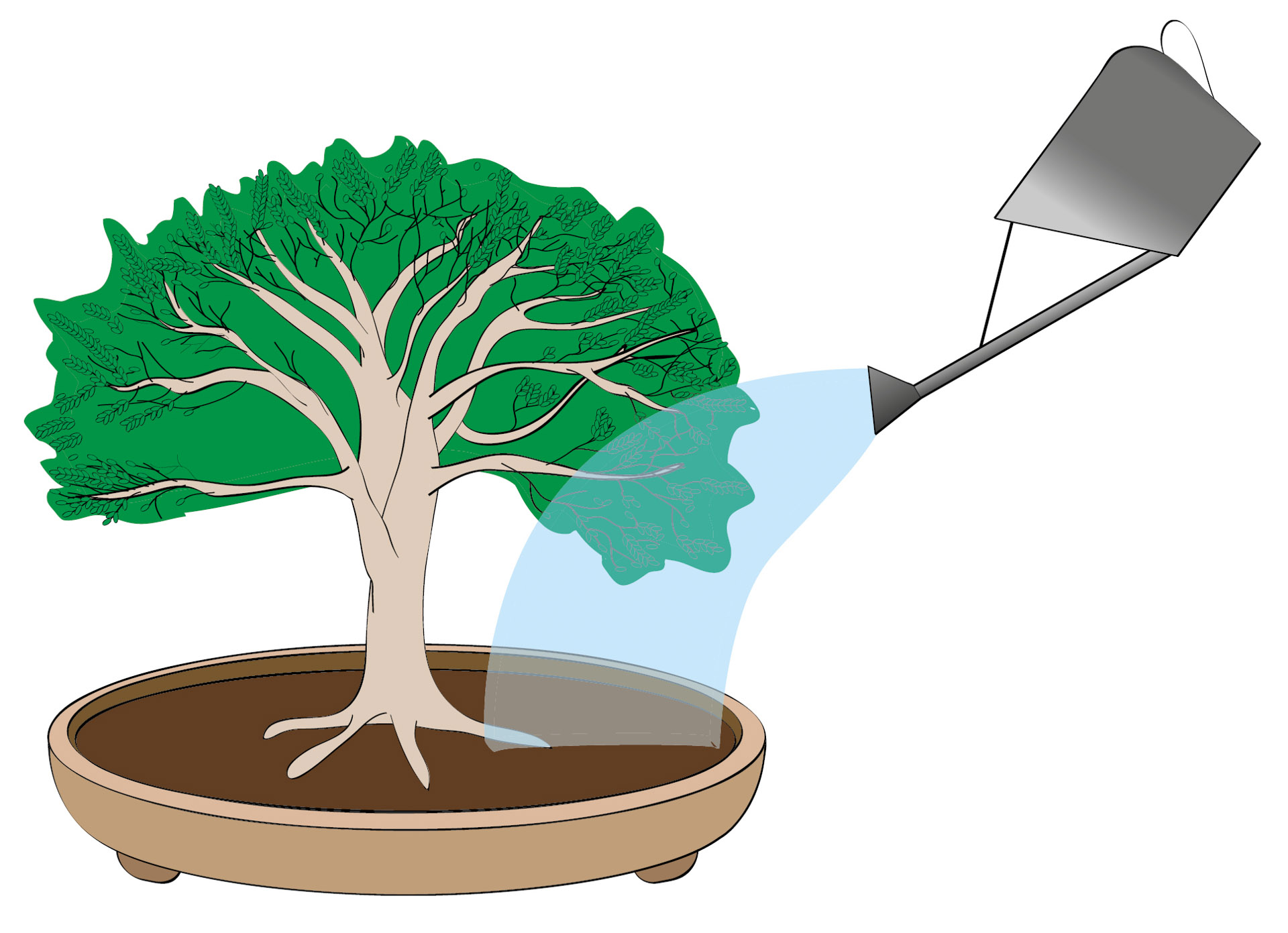
Prudence always. Check the soil. Cedars can start their root activity.

Treatment
As for January.
Activities
- Prepare for repotting: buy everything you’ll need next month like sieve, pots, wire, grids. And do not forget the soils. Visit your bonsai nursery to obtain Akadama or our European soils. Prepare your mixes. Try to keep the soils dry. They will be easier to handle and sieve.
- Preparing fertilisers: buy your organic fertilisers, or prepare them yourself. It is preferable to go to your bonsai nursery. The displays at garden centres also offer a whole range of organic fertilisers — liquids and solids. Note that the amounts used for bonsaï are the same as for any plants in a pot or in the garden! Choose fertilisers supplemented with trace elements.
- Pruning: on all the species you can cut twigs and branches. You can also clear up by selecting the buds. Leave only those that are useful. Particular cases:
- Yew (Taxus): From the end of February, and the beginning of March, remove the previous years’ leaves, retaining those of this year. In spring you will obtain a significant back budding.
- Beech (Fagus): Prepare layers this month.
- Flowering trees: Don’t prune otherwise you will remove all the flowers buds. It’s the same for fruits trees of course. The drastic cuts are kept until after flowering (or fruiting). You can repot them in a cold greenhouse.
- Tropical trees: Increase the frequency of watering and fertilising. Don’t forget to clean the leaves, which may be covered with dust.
- Deadwood: As for January. On the junipers, carving the deadwood is possible from now until September.


