
Repotting

Why do we repot our trees? The objective is not always the same since it depends largely on the age of the tree. Let’s see the hows and whys of repotting your bonsai.

For young trees the objective is to increase the density of the rootlets. The more rootlets there are, the more the tree’s capacity for absorption will increase and the more it will grow larger. Therefore, you need to appreciate that to enlarge a tree its roots should be pruned. You can also achieve the same effect by planting it in open ground where it will increase its number of rootlets because their growth is not restricted. On the other hand, the objective for an old tree is to change an exhausted and clogged soil mix, and to rejuvenate old roots.

Repotting young bonsai

When you transplant a young tree the principal objective is to increase the density of its roots. The first roots are long, a little bit ramified, or perhaps even ramified to their tips. To encourage a tree to live in the pot, it’s necessary to fit all its roots into it, and increase their density so they can provide nourishment to the tree. For these reasons you will have to repot the young trees every year even if their substrata remains correct in granularity and stability. 

At the time of the first repotting, you will need to prune the roots short, to encourage them to ramify more closely to the trunk. This is a one time only task; if you cut short like this on the following years, you will weaken the tree. Put cut paste on the large cuts to prevent the stock from rotting. If you meet rotted zones (black, soft, spongy), clean them off with a gouge or knife till you reach the healthy wood. And, always cover with a healing product containing tar, which is waterproof.

Repotting mature bonsai

Here you are going to renovate the roots and you’ll have to change the exhausted soil mix. An exhausted mix is one that, above all, makes it impossible for the plant to absorb water well and no longer aerates itself. Two phenomena are noted. First of all, the frequent waterings and fertilisation encourage the formation of a crust on the surface. Scratch off this surface from time to take. You’ll also find that the substratum itself is compacted; its particles (in the case of soil) are crushed and mass together. It is for this reason that it’s necessary to repot. 

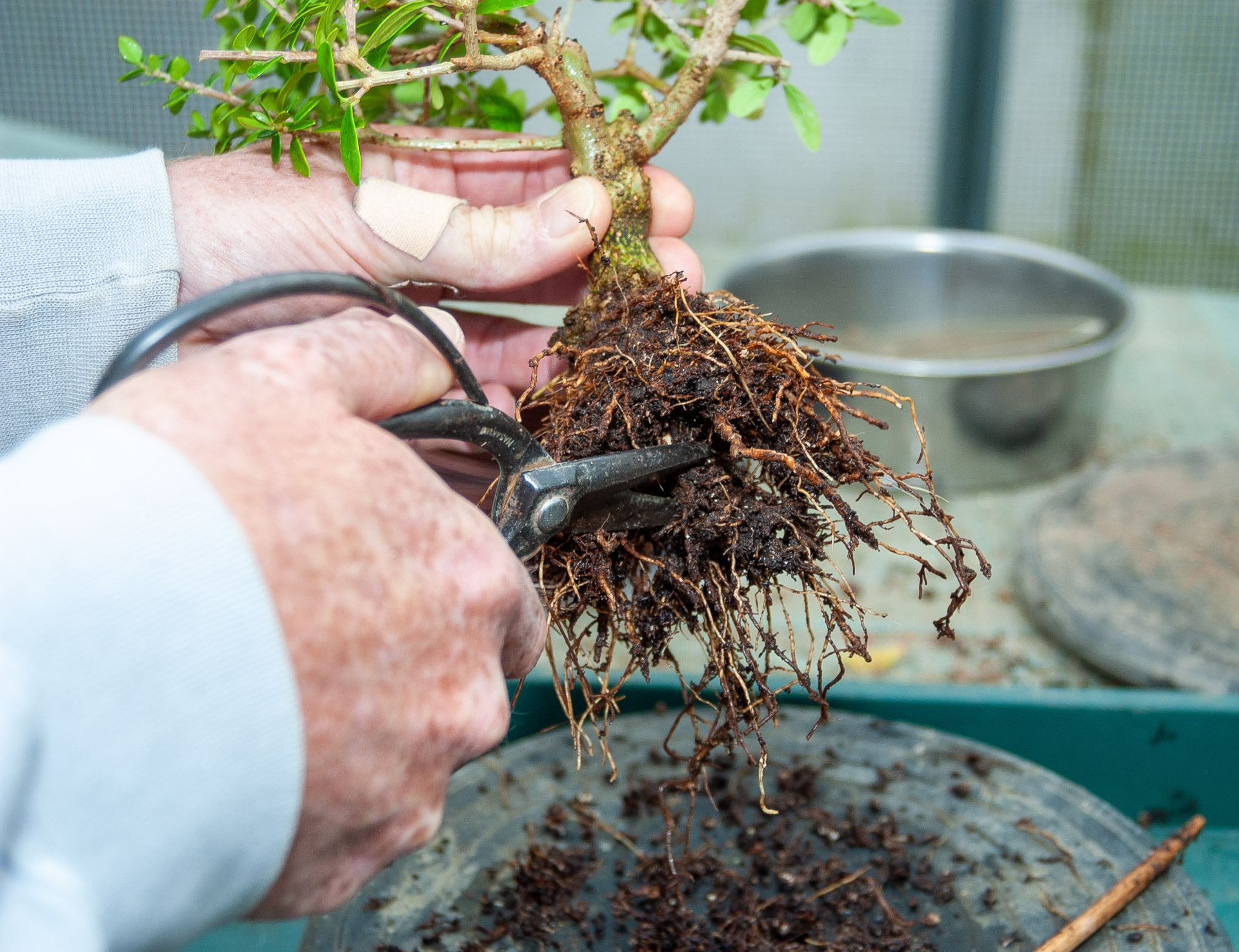
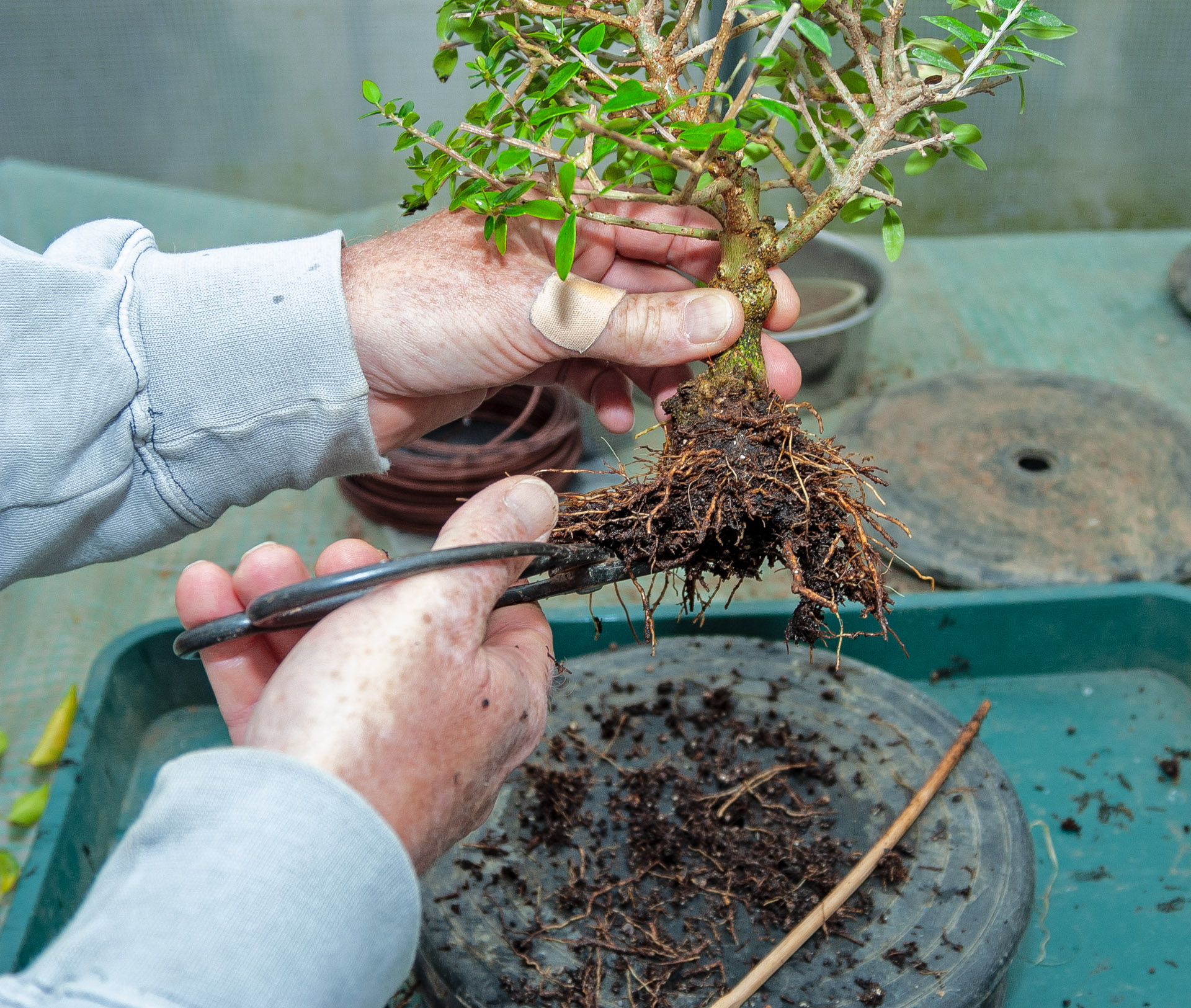
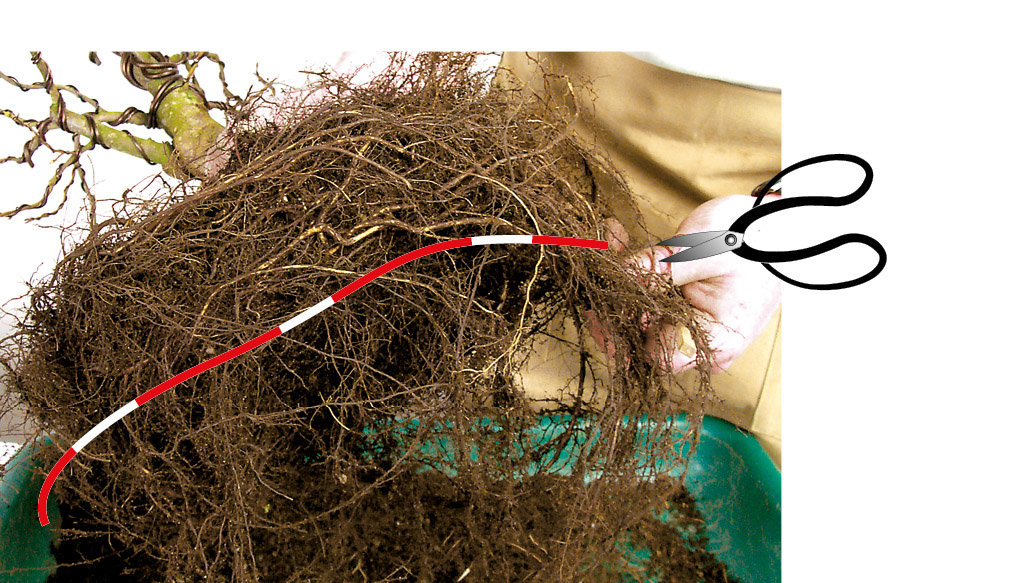
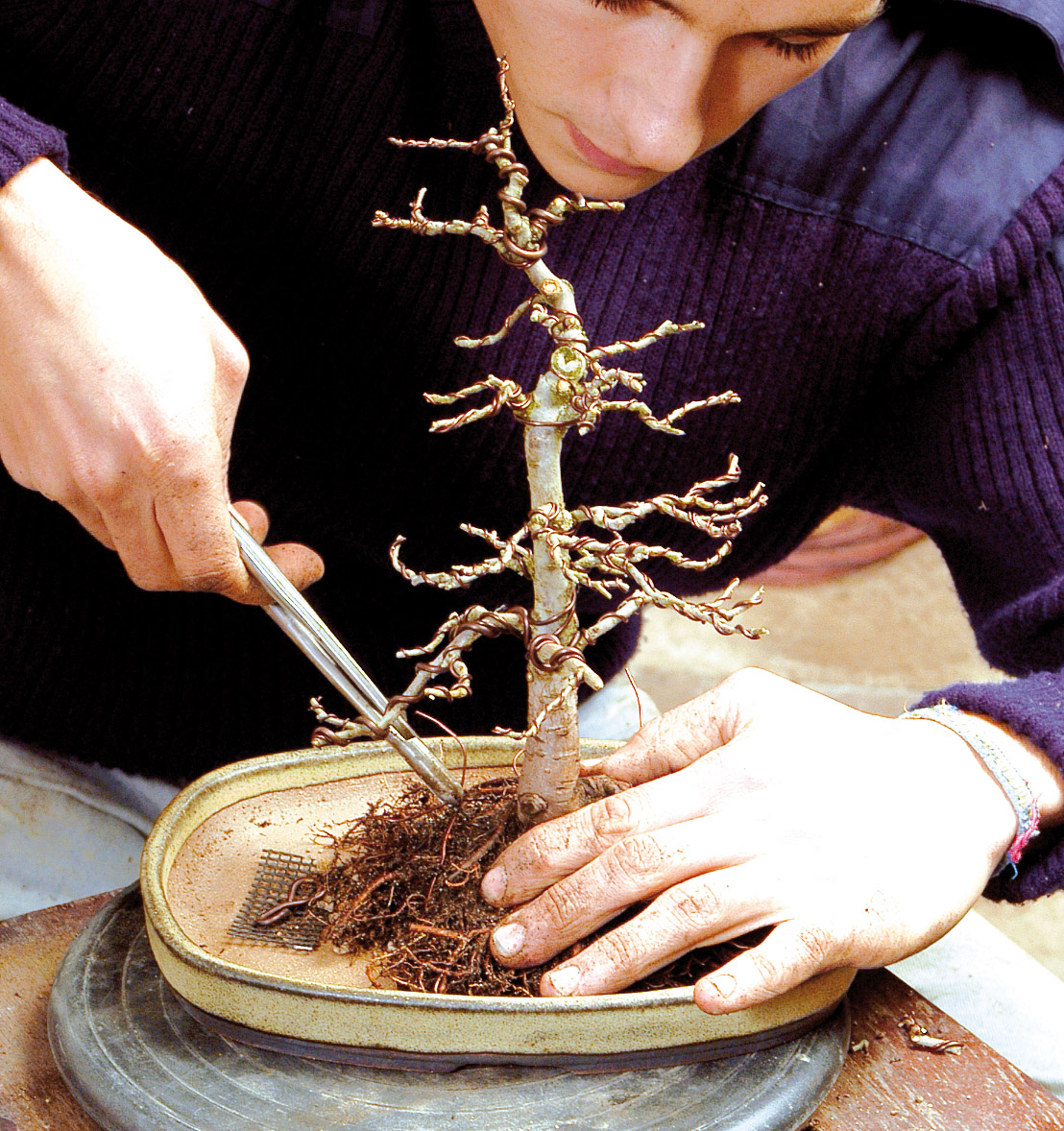
The roots, on the other hand, are ramified and dense. They should be disentangled and combed. If you do not do that, they also will become compacted, killed by asphyxiation and will rot. Prune these fine roots to the dimensions of the pot, or by removing the obvious surplus. Arrange the root base so that it is well spread out, then remove approximately a third of the roots. You will benefit by controlling old healing scars, and possibly reviving them; put cut paste on to them. You will repot every 2 to 3 years.

When will you have to repot?

  • Deciduous (and non-deciduous) trees: when freezing is no longer a possibility either at the end of the winter or the beginning of spring, and before the buds swell.
  • Conifers: it’s also possible at the beginning of autumn, but be cautious!

Repotting nursery stock

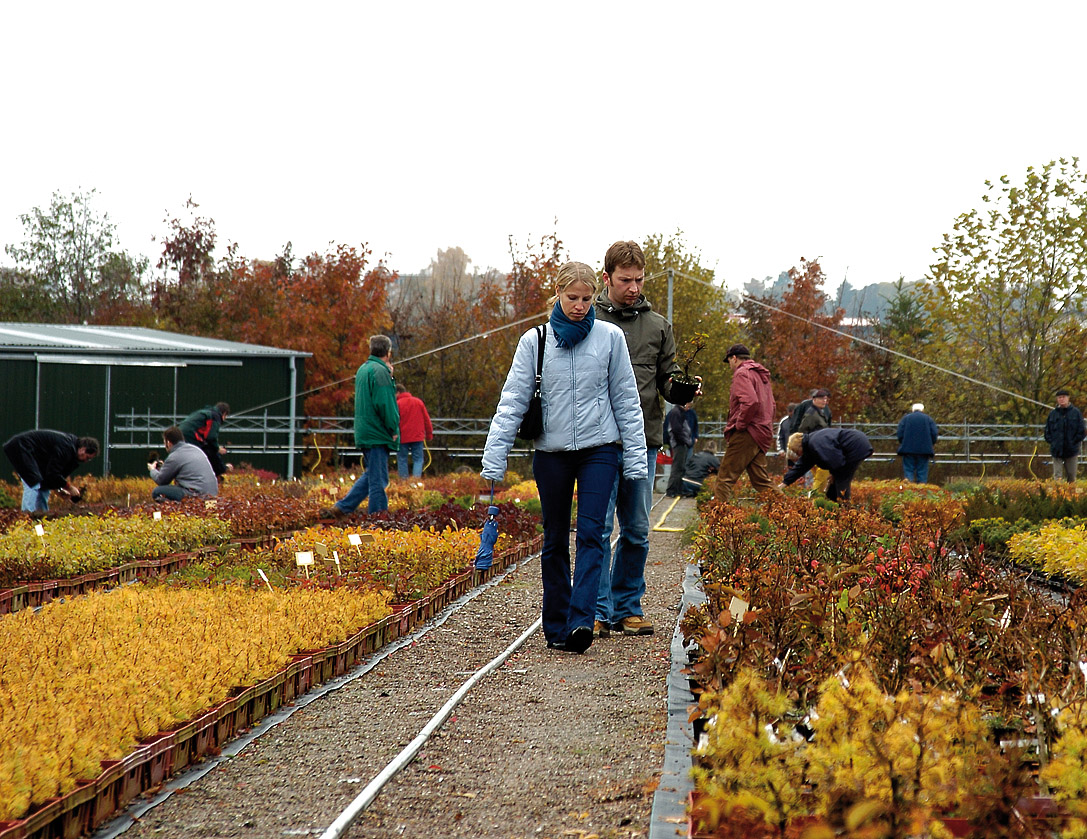
At many bonsai nurseries you can find suitable starter material that has been grown specially for bonsai purposes. They make a good starter bonsai for a reasonable price. In spring it is best to repot the tree in a shallower pot to promote the more horizontal root ball essential for bonsai cultivation.

It is very important to remove all the old soil around and under the root base. Indeed, this one is compacted and it’s necessary to check the level of moisture the number one cause of root rot.

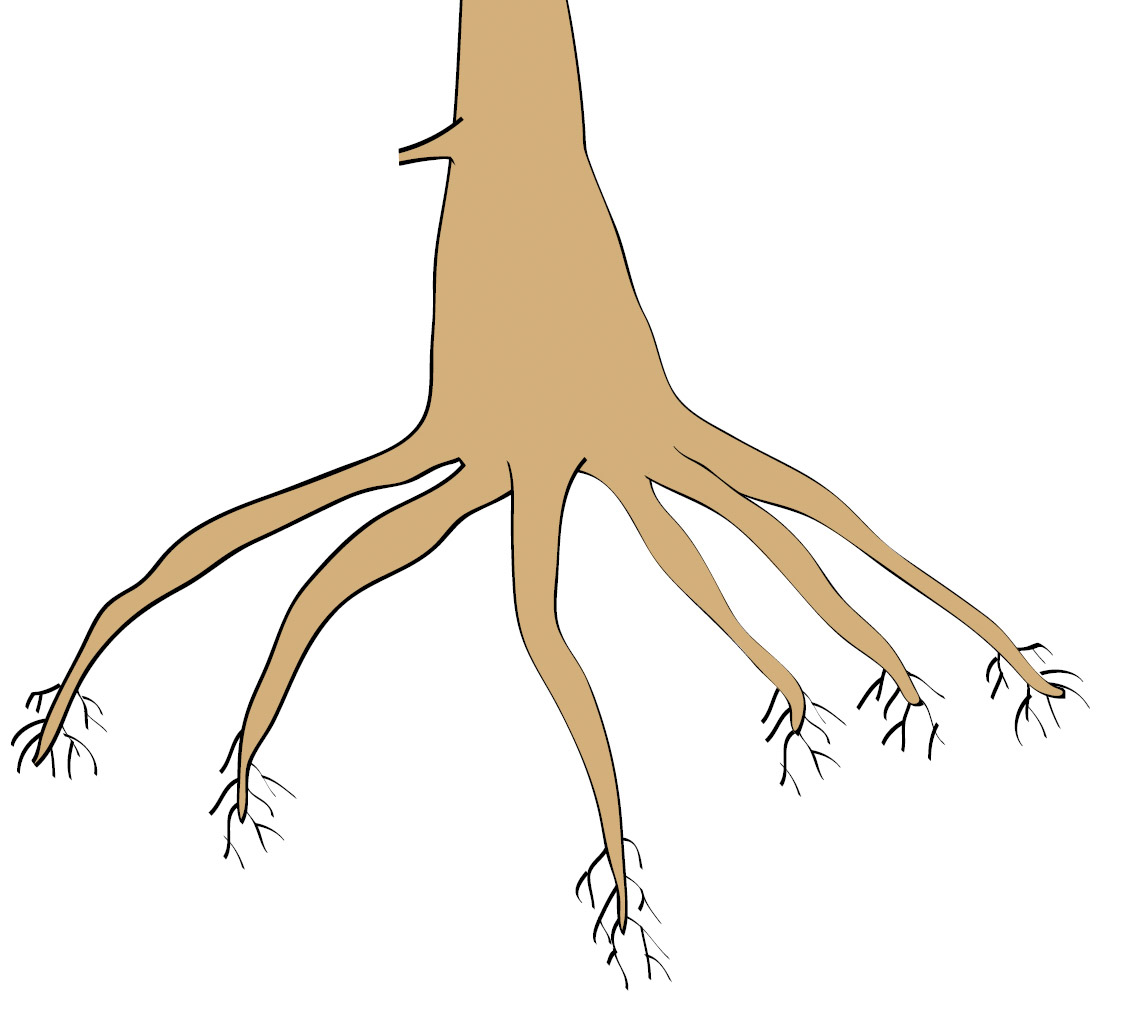
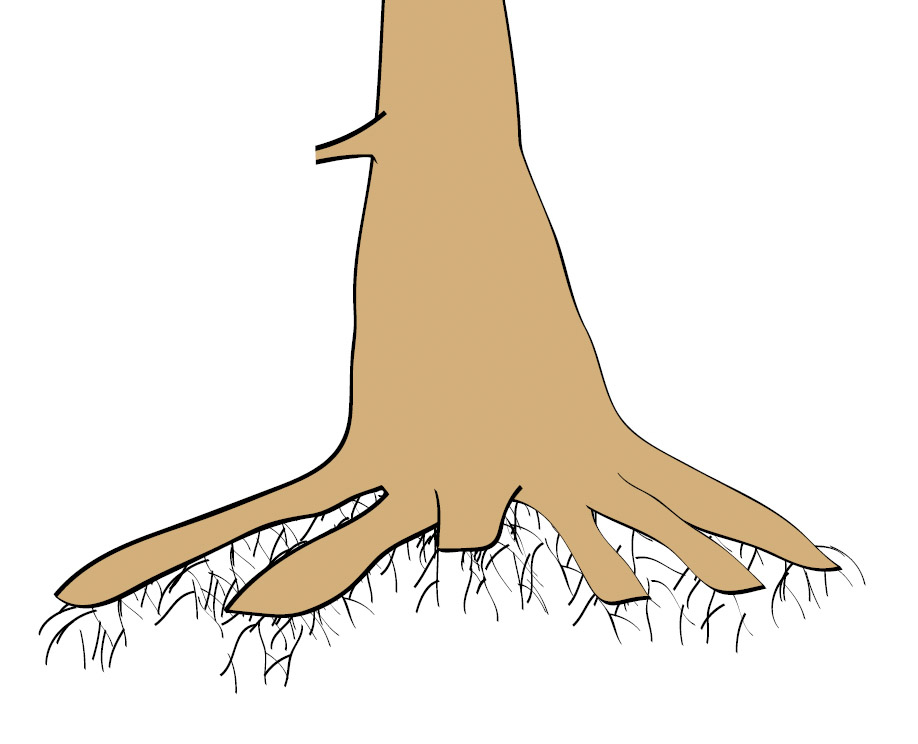
What we need is to develop side roots, which need to grow more horizontally.
The taproot holds the tree firmly into the soil, but it serves little other purpose in bonsai cultivation.

How to repot a pre-bonsai

In general
Pre-bonsai can be bought at bonsai nurseries; they are mostly imported trees from the Orient and likely to be pot bound. It’s
best to check the roots and repot as soon as possible. In spring you can repot the tree safely.


Old trees
The objective of repotting is, above all, to maintain the vitality of the roots. It is desirable that the roots remain young, even on an old tree. It is via these rootlets that the tree is nourished. A great number are necessary and they need to be in good health. Just follow the same method of repotting as for mature trees. The soil mix could be finer, since the roots are already established and you don’t need to develop any more, just preserve those you have.

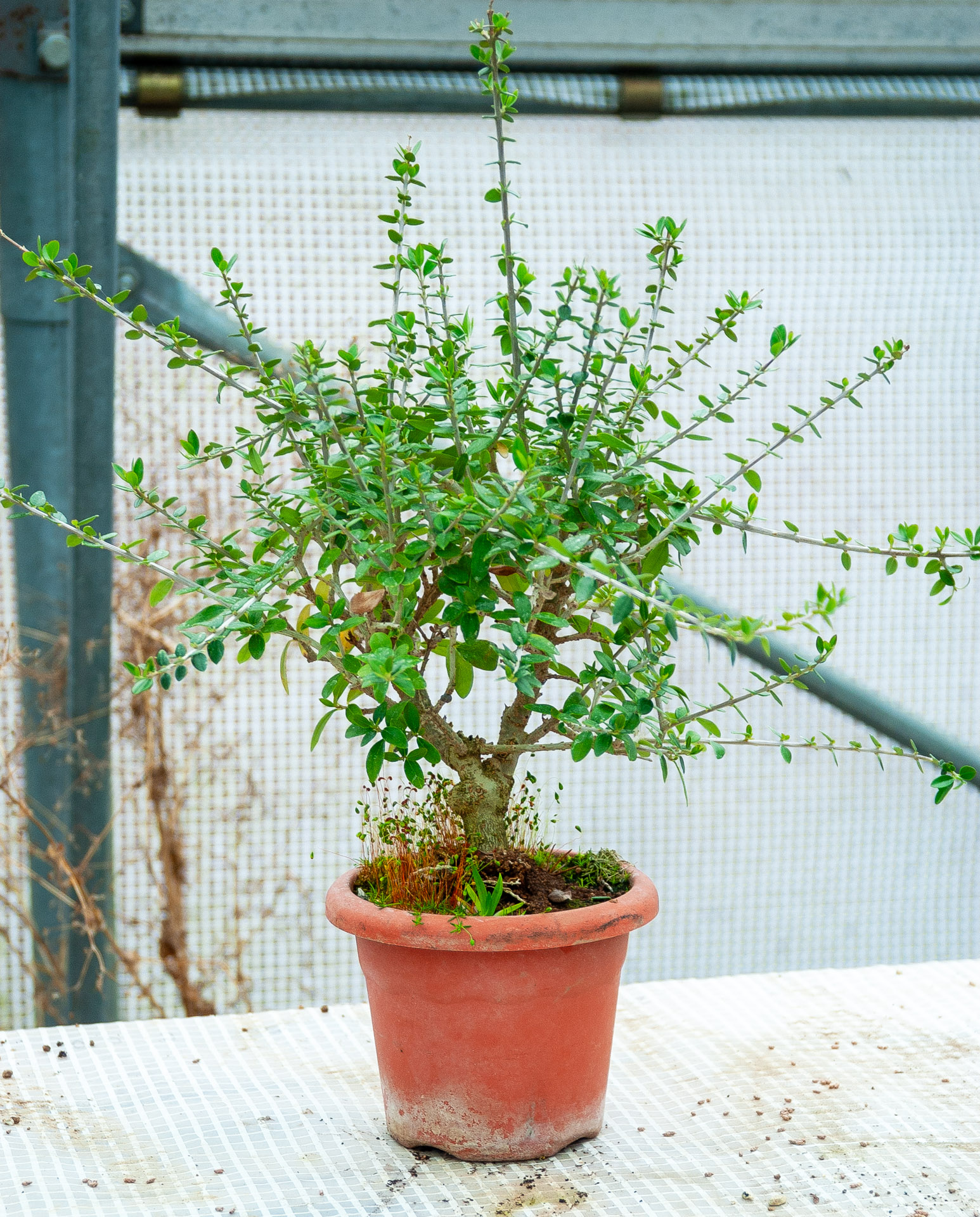
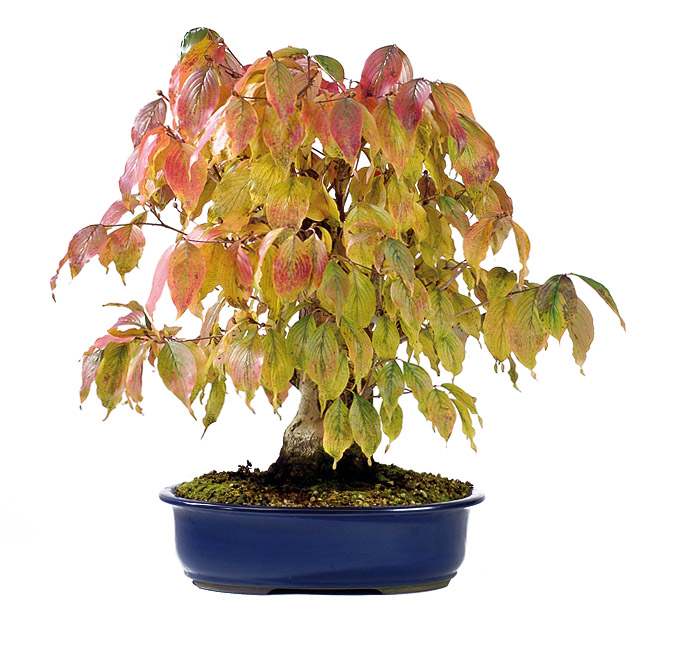
A typical tree that can be bought at a bonsai nursery.

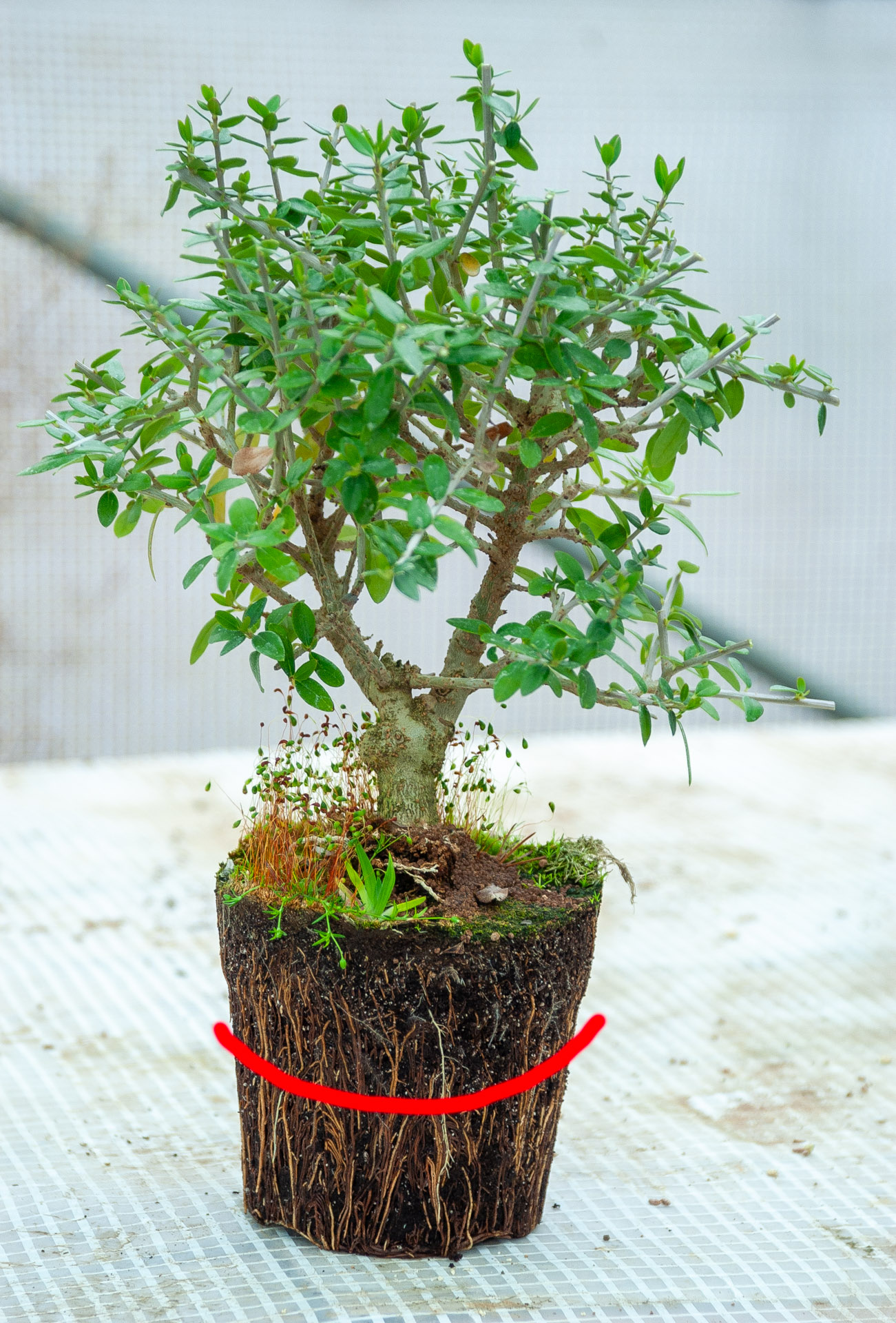
Taking the tree out of its pot and reducing the size of the root ball

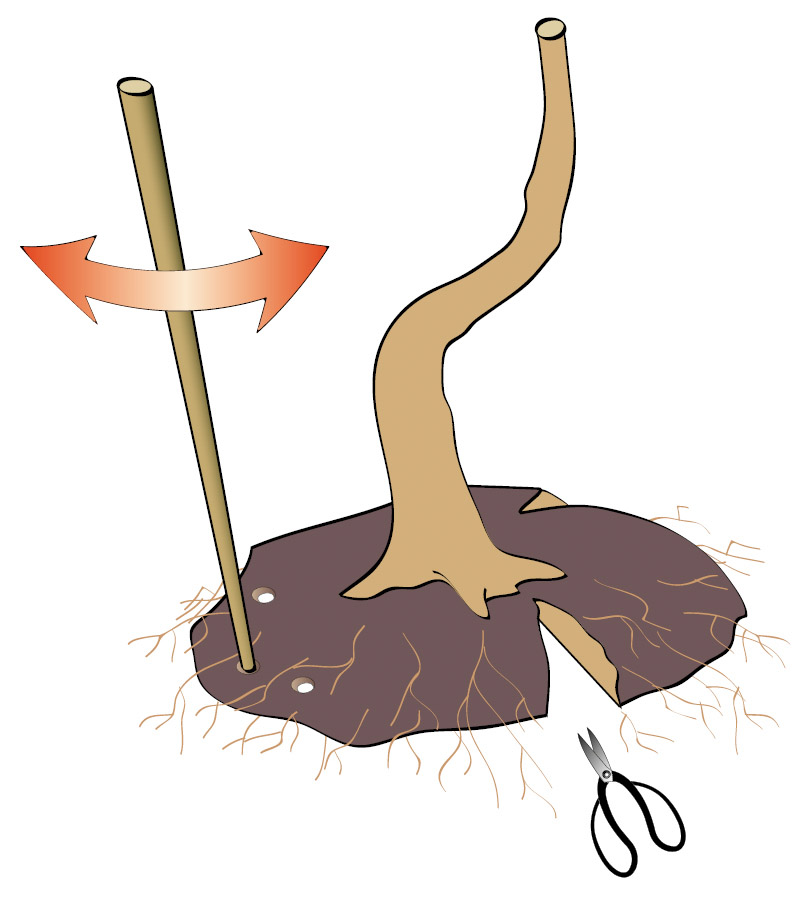
Cut the small roots or rootlets at this level.
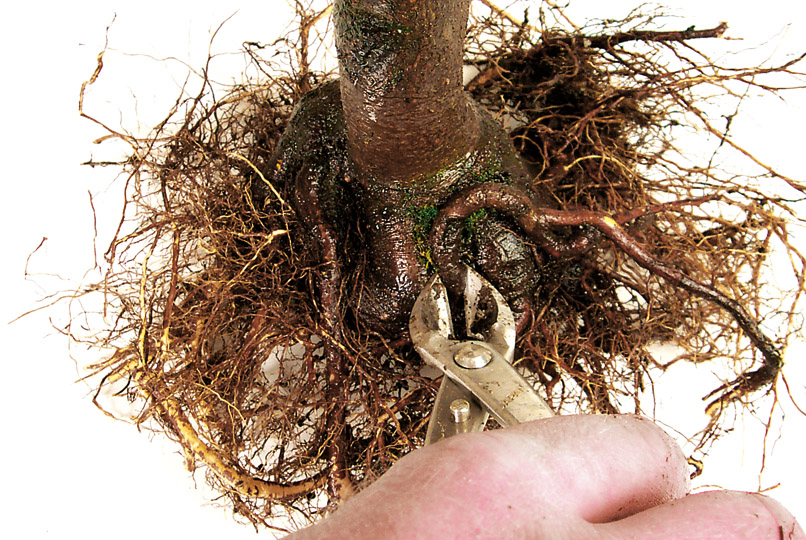
Remove thick roots at the base; the root base should grow .
Remove surface roots that cross one another.

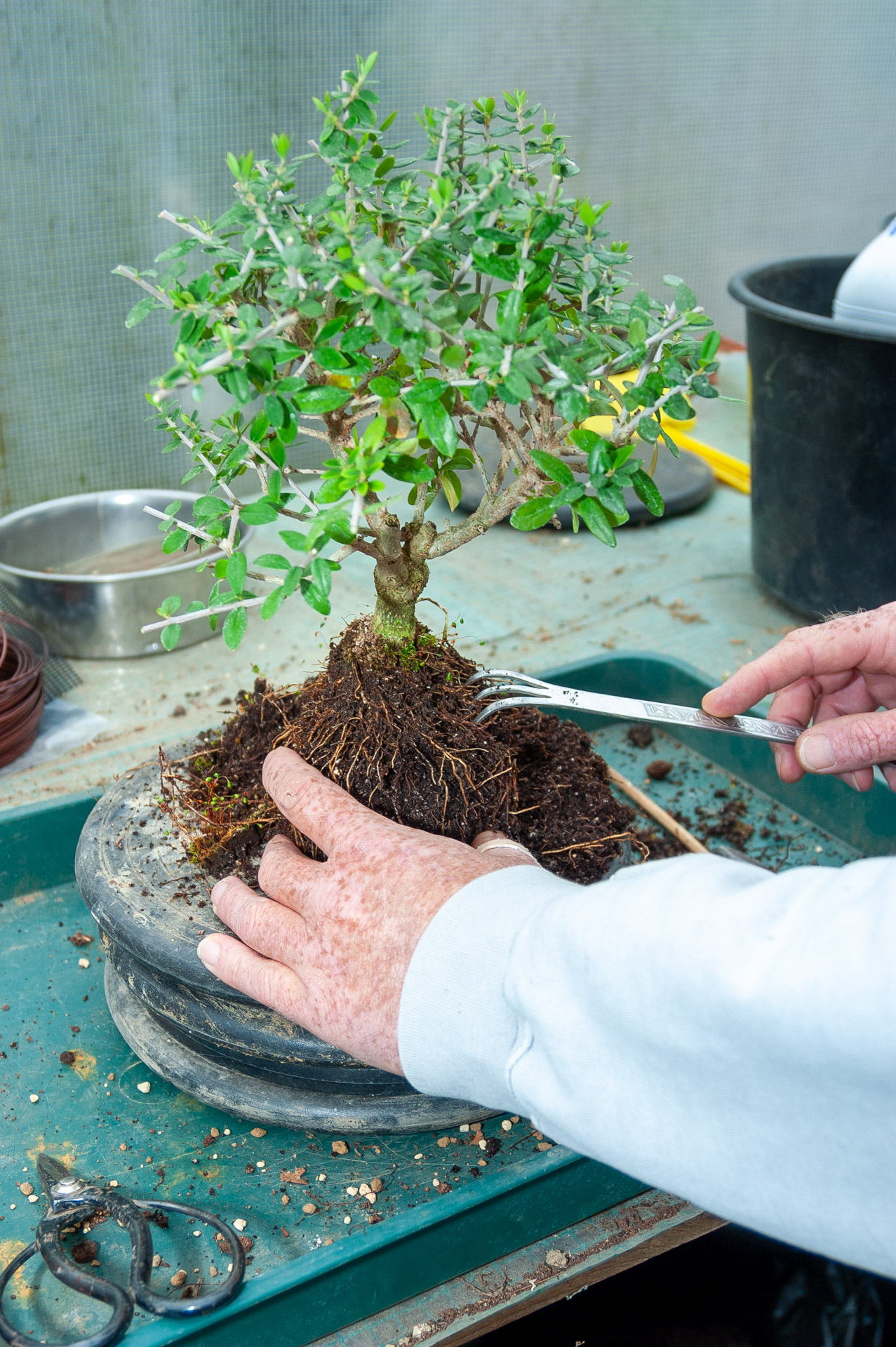
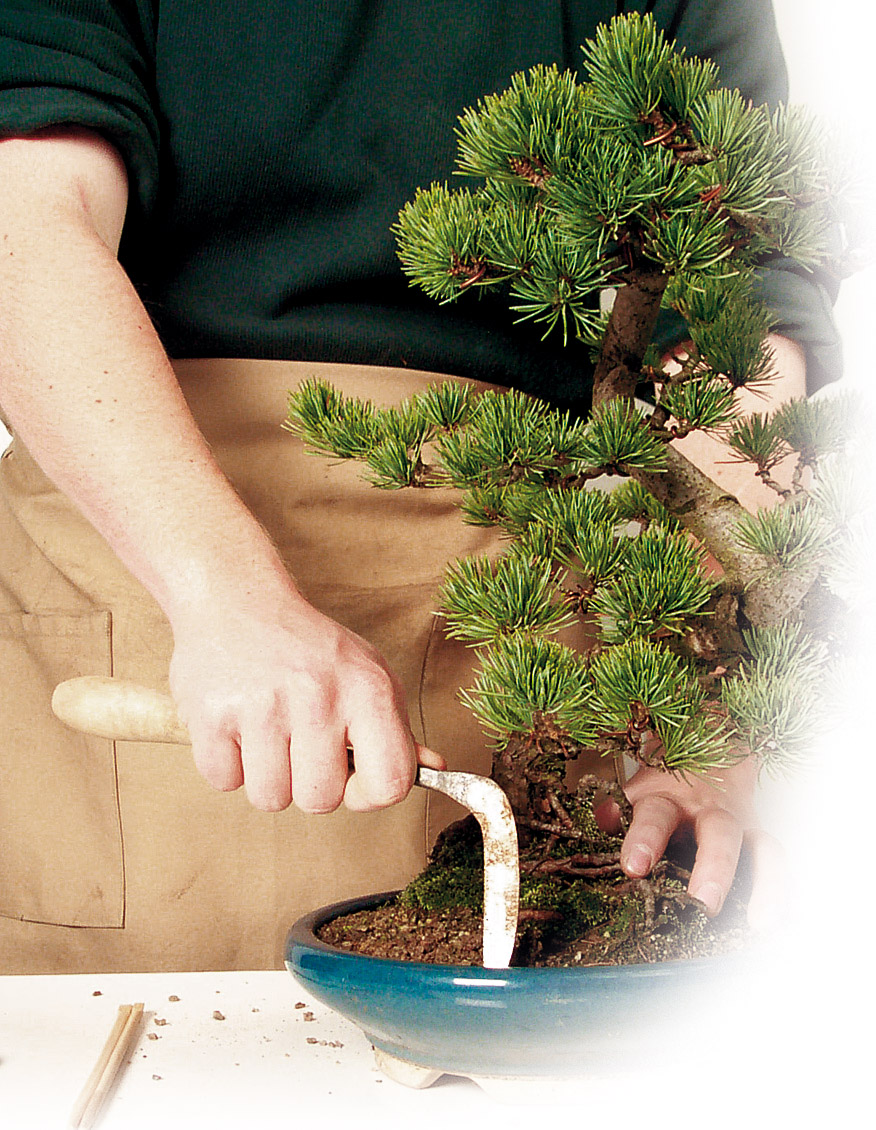
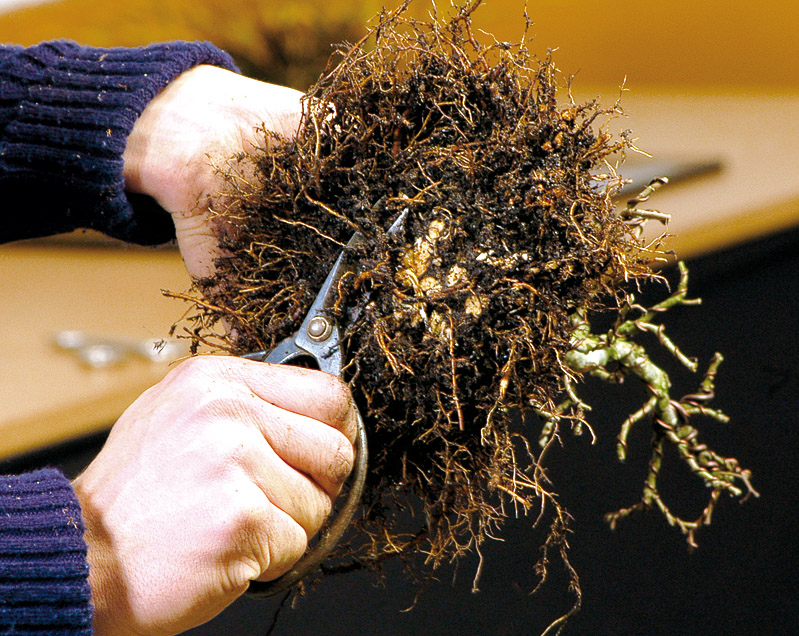
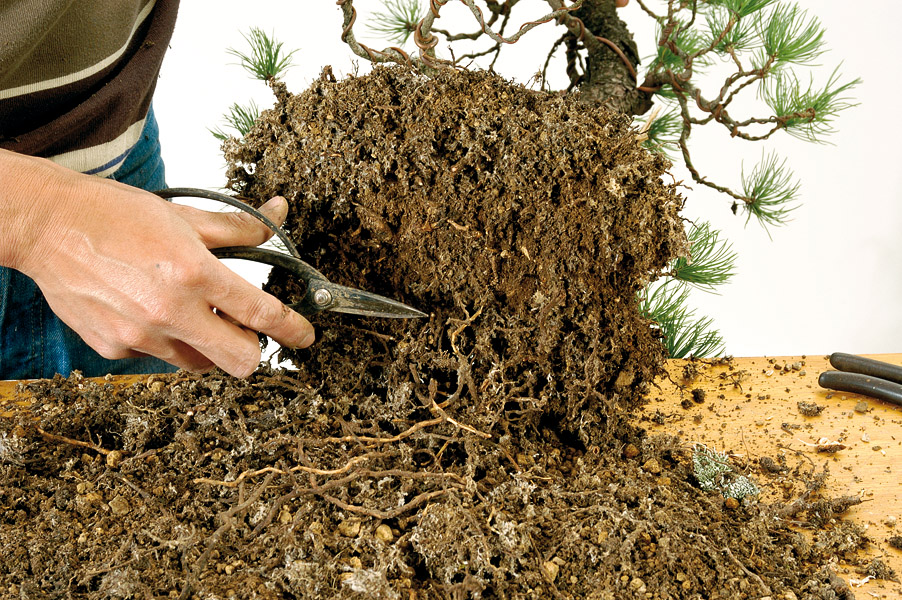
Method of removing the soil close to the base; When the root ball is very tangled, untangling it with a rake is too harmful for the tree. Instead remove slices with root shears or loosen with a chopstick making spaces. It’s important that air can enter the tangled root base.

Carefully remove all the old soil from the edges of the root mass.

Planting the tree into its new pot

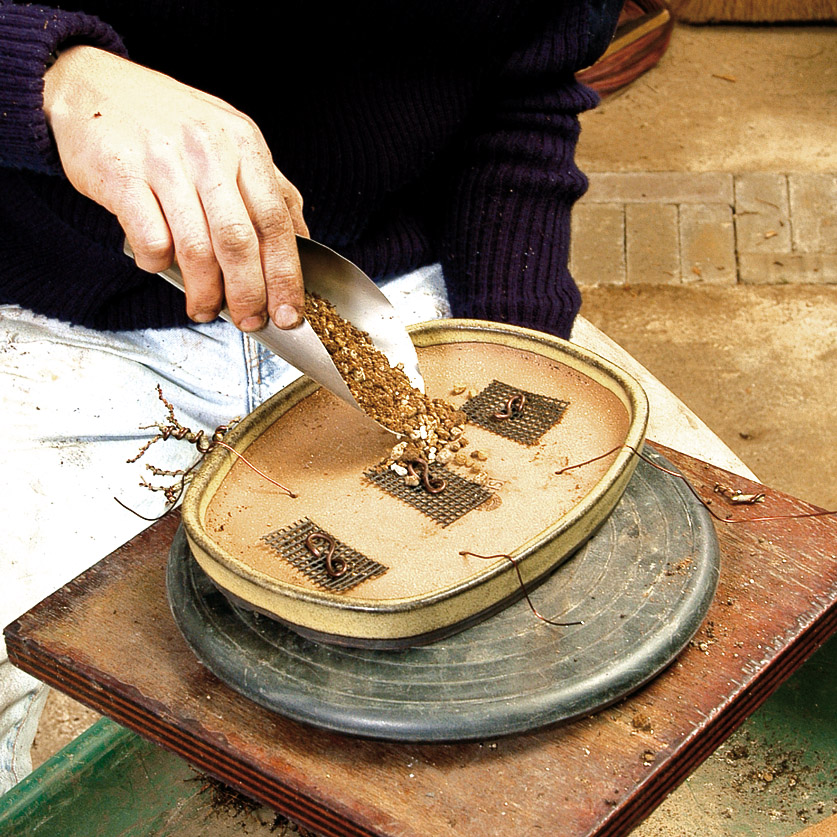
Pass wire through the drainage holes and make a mound from the soil mix.
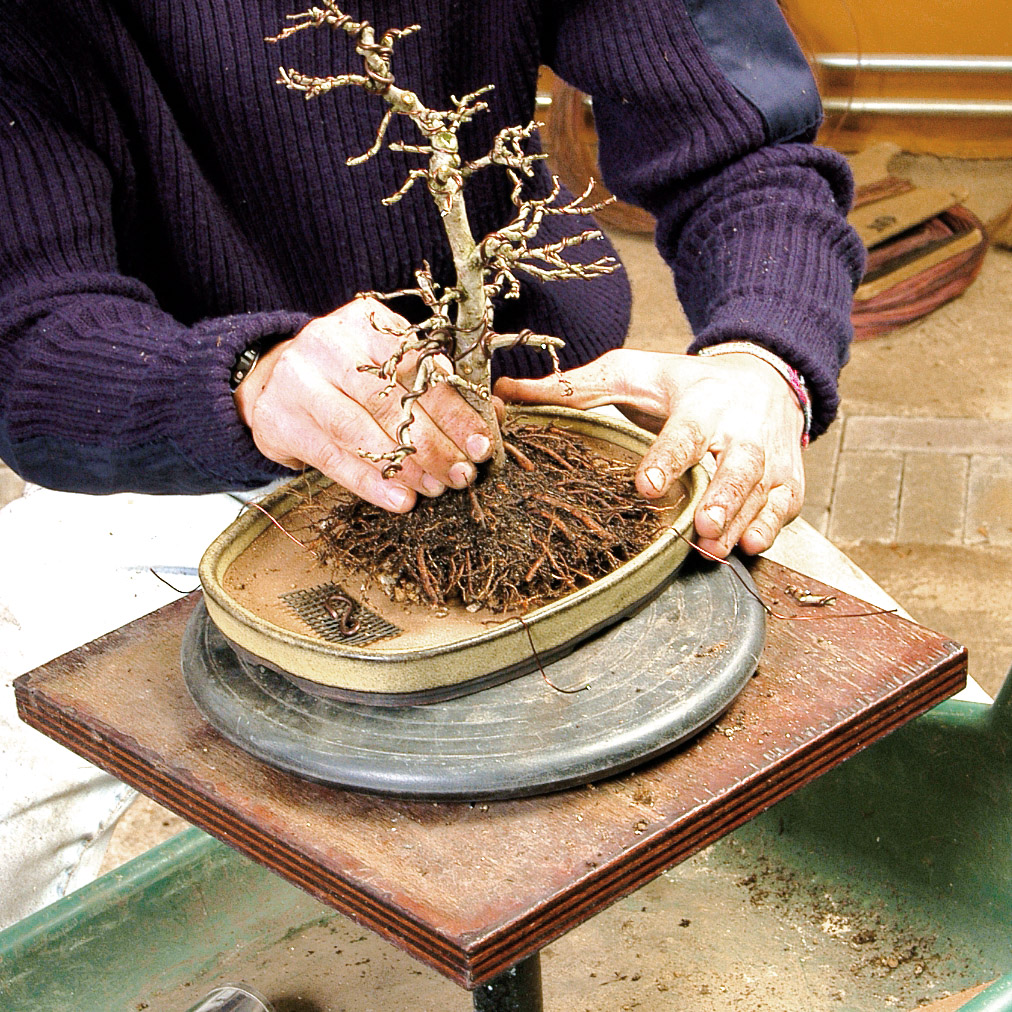
Place the tree on the mound of soil and press it slightly.

Tip for pines

Their roots are fragile and they react badly to being cut or harsh handling. Think of humidifying them with a sprayer during repotting. Operate gradually. For example do not remove all the old soil at the same time, but in two successive seasons. It’s just the same when making cuts. You will be able to repot them at the beginning of autumn or at the end of winter.
Firmly attach the tree to the pot.
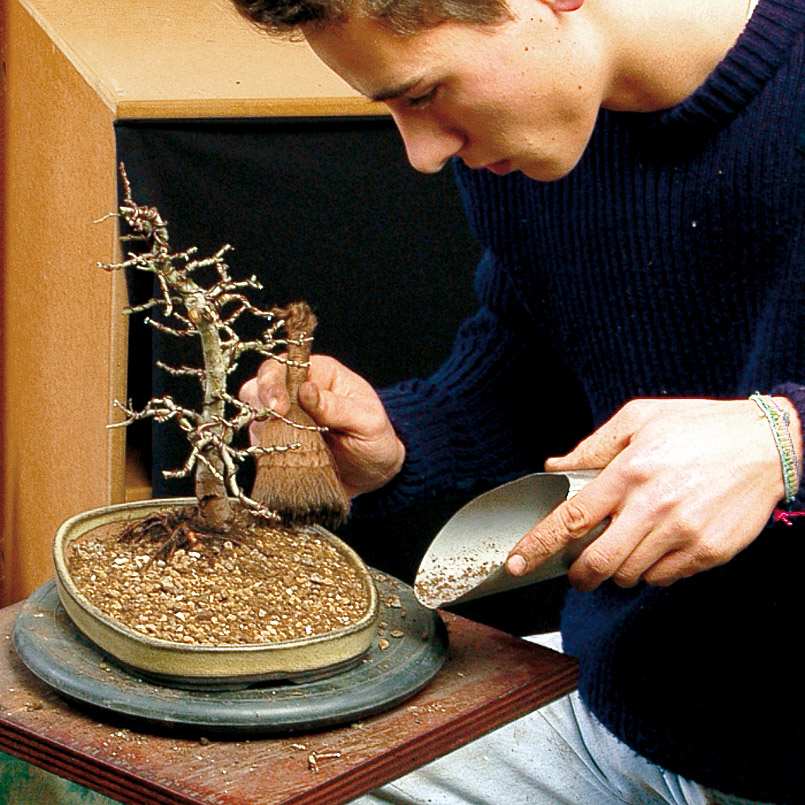
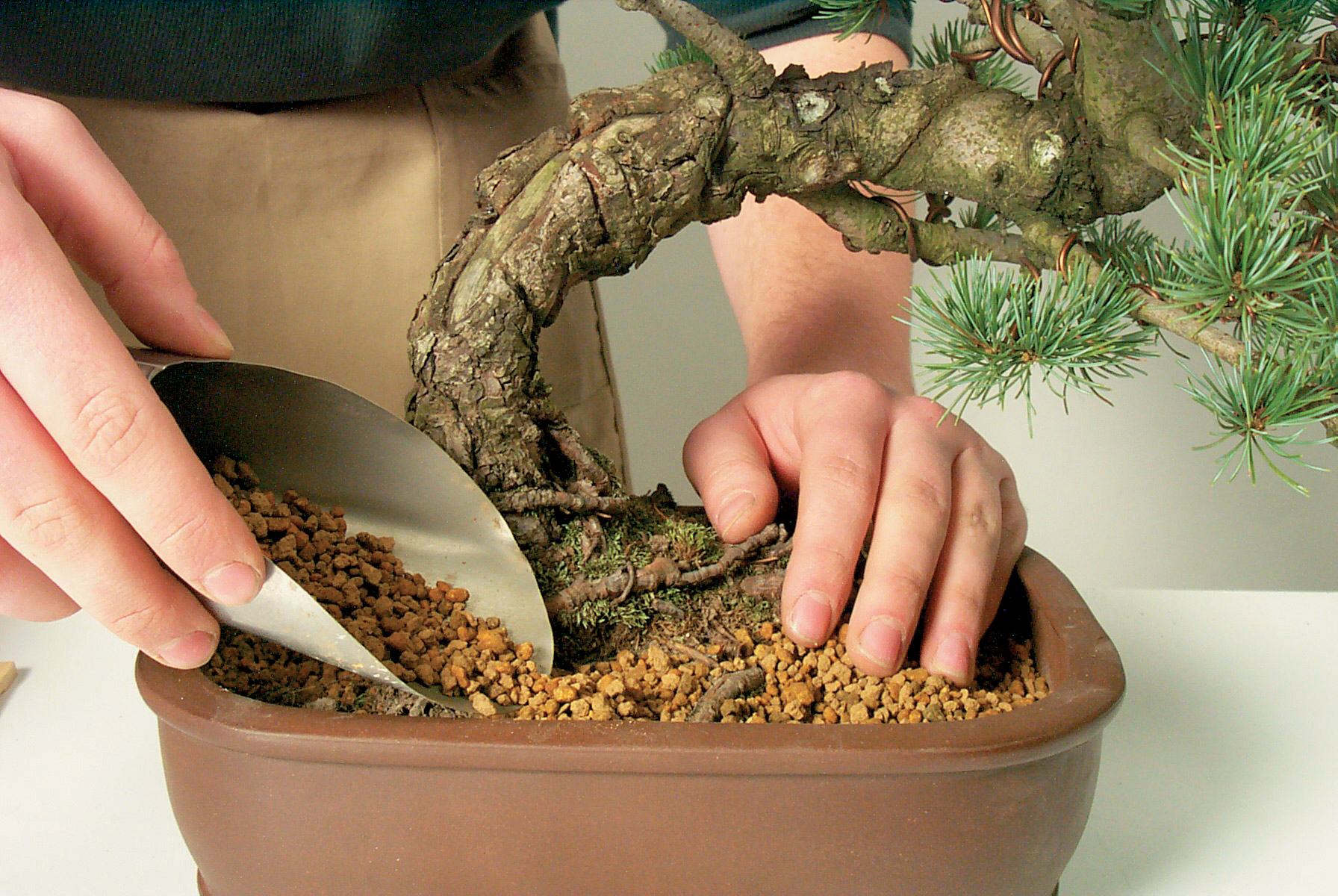
Check the position of the tree and adjust, if necessary. Add substrate Then water until the water runs clear from the drainage holes.

© 2026 All Rights Reserved

Send me the newsletter.

You can cancel your Bonsai Today membership at any time, and you will continue to have access to Bonsai Today through the end of your billing period.  To cancel, go to the ‘Members‘ page and click on ‘Cancel‘ in My Memberships.