
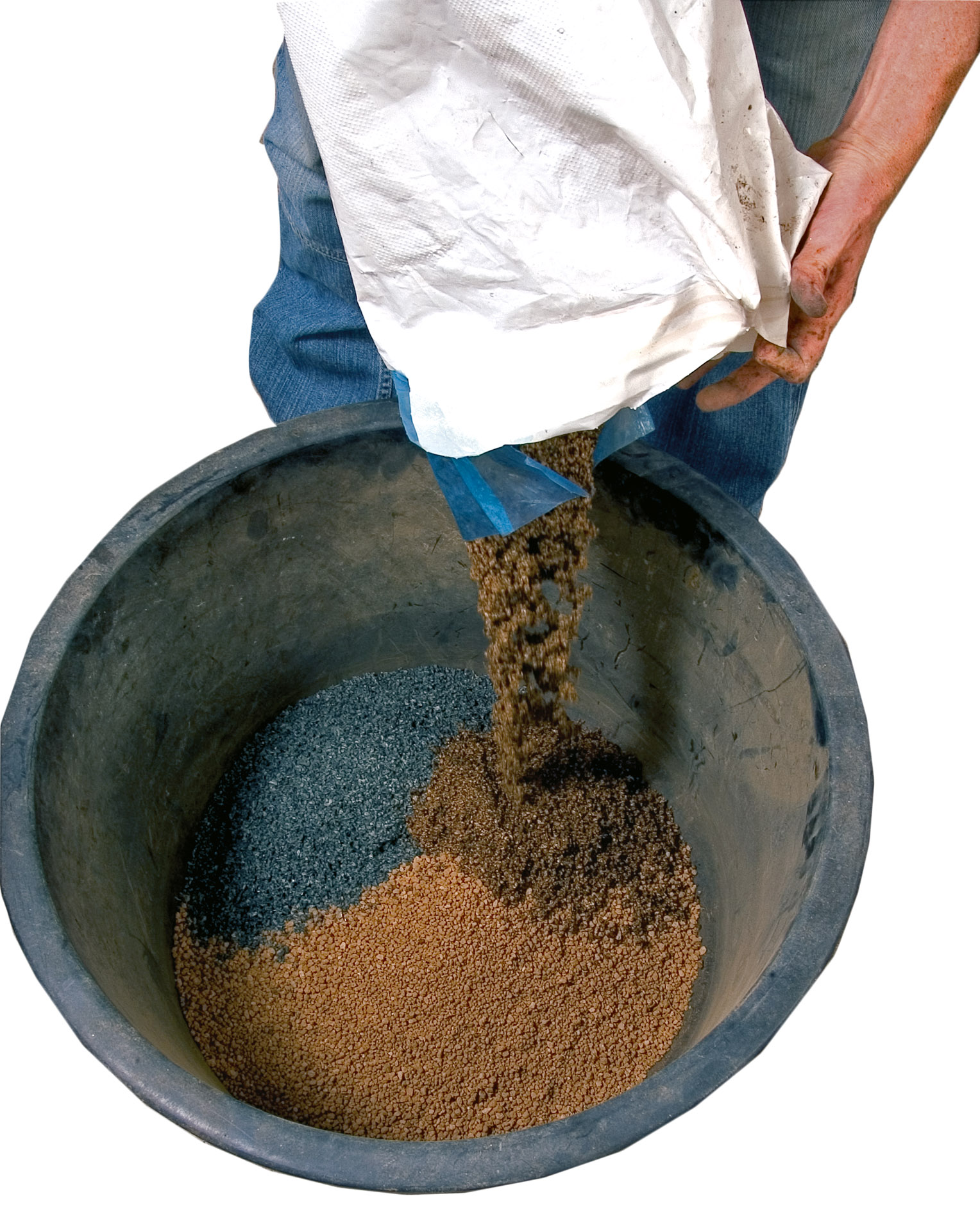
NPK
This is the trio you find in fertilisation. In spring, the N should be high. In autumn it’s the P and K
NITROGEN (N)
Nitrogen (N) promotes fast growth of leaves and branches, good health in leaves and activates assimilation activity. Not to be give in the form of nitrites.
Note that a tree is seldom deprived of N.
PHOSPHORUS (P)
Phosphorus (P) assists in the maturation of the tree, increases the strength of the roots and supports flowering and fruiting.
Activates foliage.
POTASSIUM (K)
Increases resistance to dryness, to diseases and the cold. Controls growth. It’s associated to phosphorus.
Trace elements
IRON (Fe)
Major trace element that has several roles of paramount importance. Its deficiency is serious causing chlorosis. It is, in effect, essential to the formation of the chlorophyll and proteins of the plant
CALCIUM (Ca)
Necessary to the stability of the substrata, and also important for the assimilation of the majority of trace elements. In particular, it allows the plant tissues to
improve their resistance.
MAGNESIUM (Mg)
Third major trace element. It is a constituent of chlorophyll and also allows the assimilation of phosphorus.
Drainage and aeration
PUMICE
Light volcanic rock (Italy). Granular.
Kiryu
River sand of volcanic origin, in various granule sizes. It’s completely neutral without being capable of absorption.
Soils
Kanuma
Acid soil (Japan) of pH 4 to 4.5, essential for azaleas.
Akadama
Neutral substratum, origin (Japan) reconstituted in pellet form.


